

By Professor Tiffany Banks On Tuesday, September 30th , students from my COMM 108: Foundations…
by Professor Matthew Decker
It’s always a magical time at the National Portrait Gallery thanks to Briana Zavadil White, the Head of NPG’s Education and Public Programs. Whether sharing the museum’s history or engaging active learning (infused with a healthy dose of competition) or leading a rich analysis of non-representational portraiture, she is an inspiring educator. She is also a great context-builder, reminding Fellows at the start of our visit that NPG “tells the stories of our country through the people who shaped it.” As an educator with an Art History background, I’ll dare to underscore how fun these stories are to unpack, too. But that’s only one window into the artwork itself, for NPG employs three lenses of interpretation: visual arts, history, and biography.
“The Elements of Portrayal” are an exceptional tool to guide interpretation as well, and Zavadil White put us to the test early on in the Recent Acquisitions section of the museum. Each fellow was handed a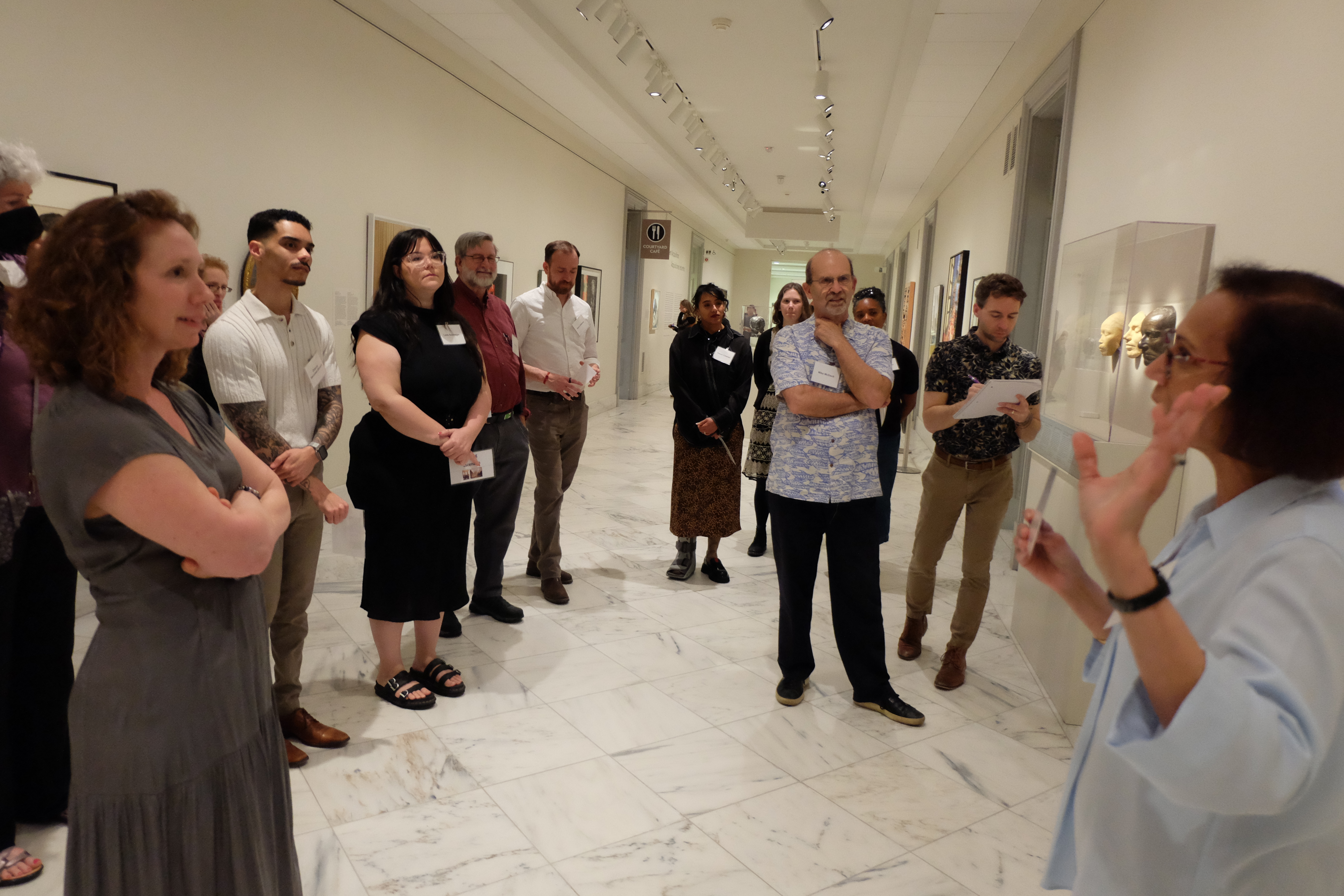 card that featured one of the elements: objects, scale, color, facial expression, clothing, hairstyle, media, artistic style, pose, and setting. Then, they were asked to identify the portrait best representative of their assigned element. It was interesting to note the speed at which Communication professors Tiffany Banks and Lane Schwager raced ahead of their colleagues to begin this intellectual endeavor! Despite a comically competitive start, though, the Fellows paired their element cards with gorgeous portraits, and I invite you to check them out:
-
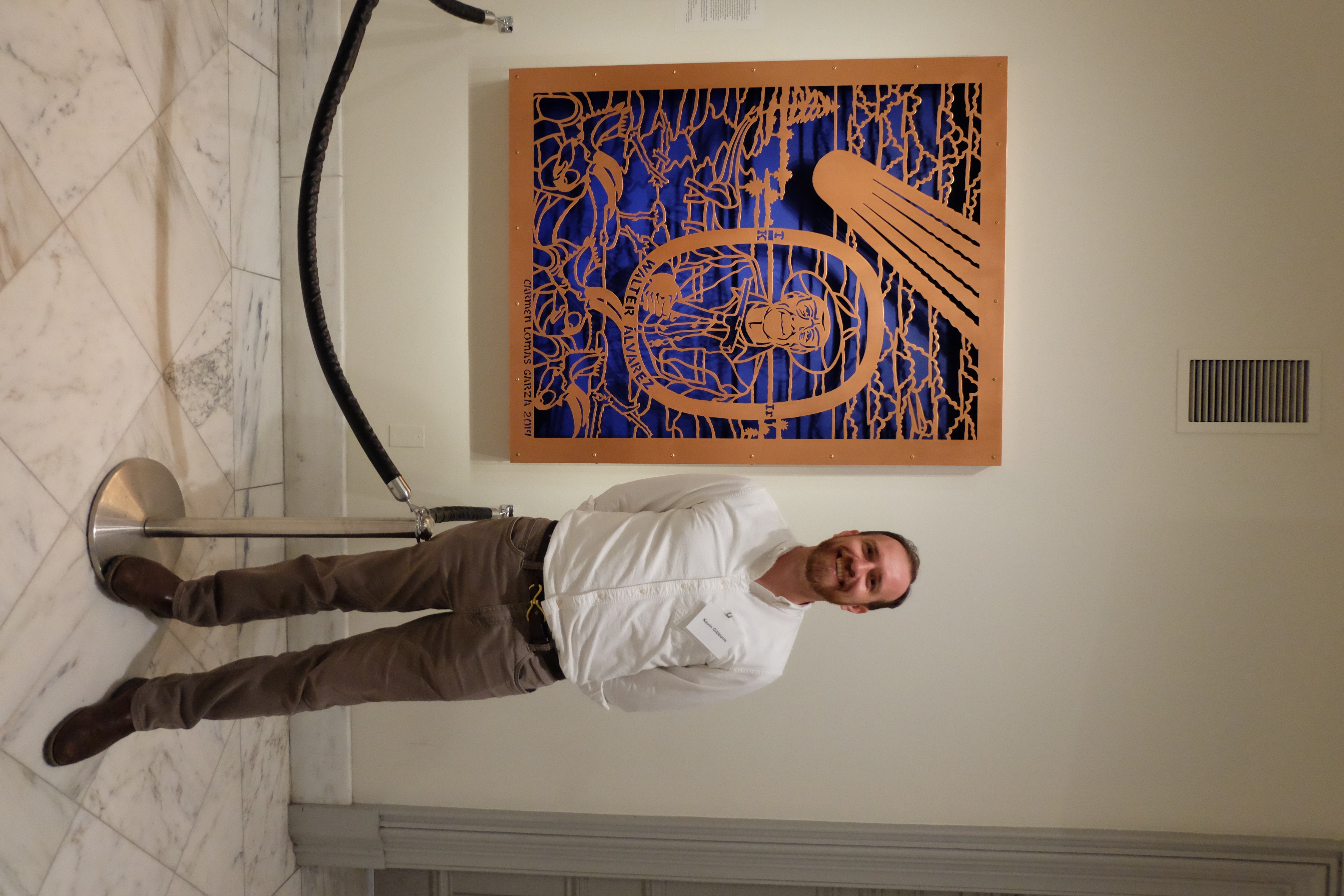
Kevin Gibbons Anthropologist Kevin Gibbons wielded the objects card and selected Carmen Lomas Garza’s Walter Alvarez due to its rich iconography.
- Tiffany Banks, a Communications professor, appreciated the facial expression in Kara Walker’s stunning tribute to Toni Morrison: Quiet As It’s Kept.
- Chemist Orlando Genovese-Stewart admired Sedrick Huckaby’s approach to scale in capturing the dynamic life of Opal Lee.
- Everyone’s favorite Music instructor, Heather Brown, selected Mariana R. Cook’s Vera Rubin, Washington, DC; 16 October 2003, which showcases the understated clothing of a pioneering figure in astronomy.
- The shock of color present in Carmen de Lavallade, photographed by Michele Mattei, entranced English Professor Theron Coleman.
- Ron Nunn, of the Anthropology Department, discovered a rich hairstyle-driven story in Addison N. Scurlock’s crayon(!) portrait of entrepreneur Madam C. J. Walker.
- For media, Mike McDavit, of the Chemical and Biological Sciences Department, selected Ruth Asawa’s Untitled (LC.008, Buckminster Fuller Life Mask – Estate Cast).
- Economist Basman Towfique-DeWald drew attention to the unique artistic style of Shigeko Kubota’s Self-Portrait, a time-based media artwork.
- Thanks to the slight tilt of the chin and a proud demeanor, Ruth Light Braun’s conte crayon rendering of Molly Pican inspired English Professor Erin Aust’s selection for pose.
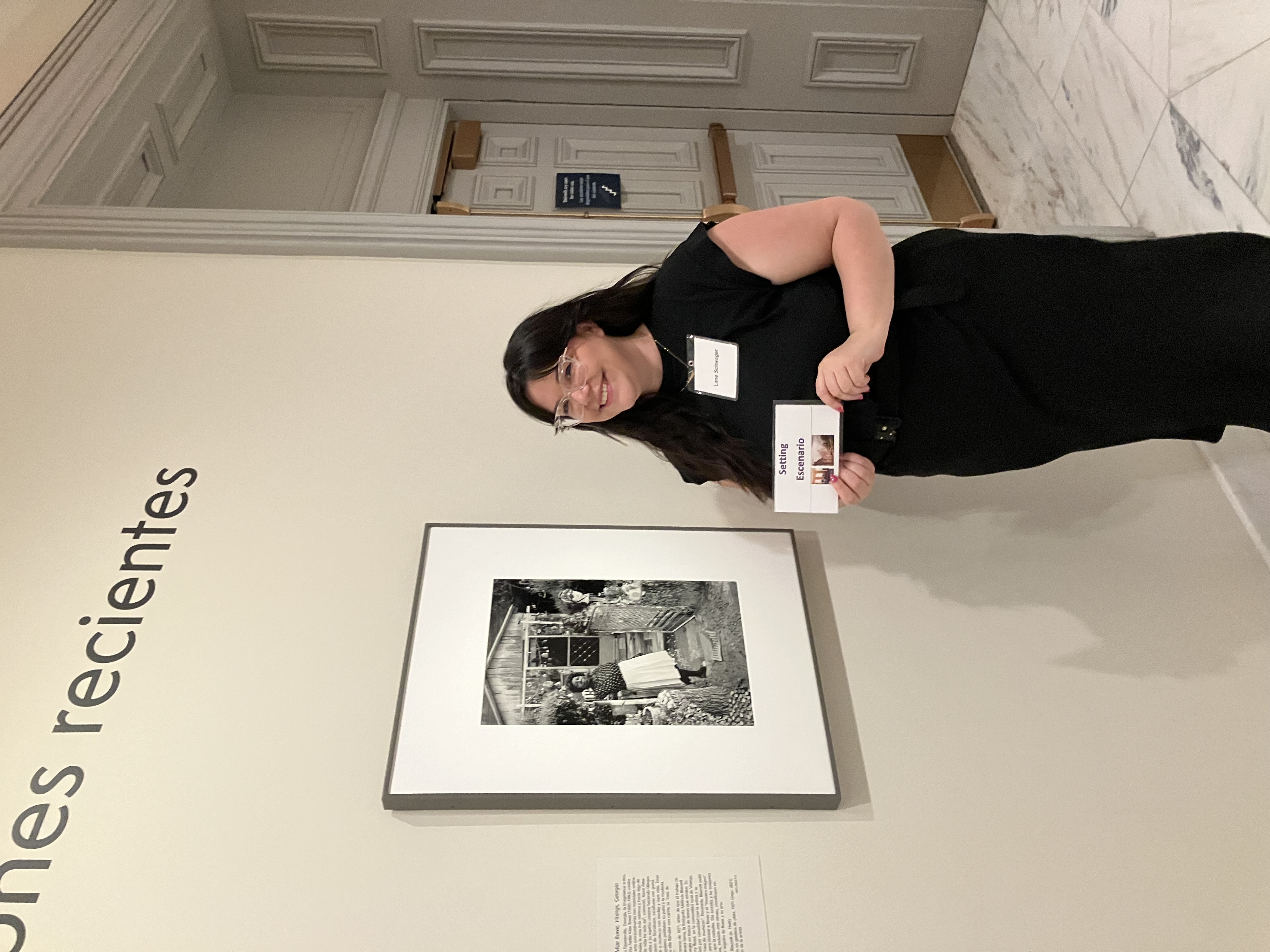
Lane Schwager - Finally, Communications Professor-turned-art-historian Lane Schwager highlighted the content-rich setting that envelops the sitter in Nellie Mae Rowe, Vinings, Georgia.
After our art adventure, Zavadil White invited us to share takeaways. What did we learn about close-reading portraiture? Could this activity serve our instruction? In addition to feeling more confident about guiding their own students through a similar activity, Fellows witnessed the art come alive. They recognized the conversation that must have been shared between sitter and artist. They appreciated the artist’s agency in making nuanced choices to capture the sitter’s essence. Most importantly, they saw the potential for collaborative learning to take flight. Each one of us could contribute a valuable insight in response to the artwork. Inviting our students to the table will be key, though. Moving from opening observations with questions like “What do you see?” will drive the engagement and boost the confidence needed prior to more formal interpretation.
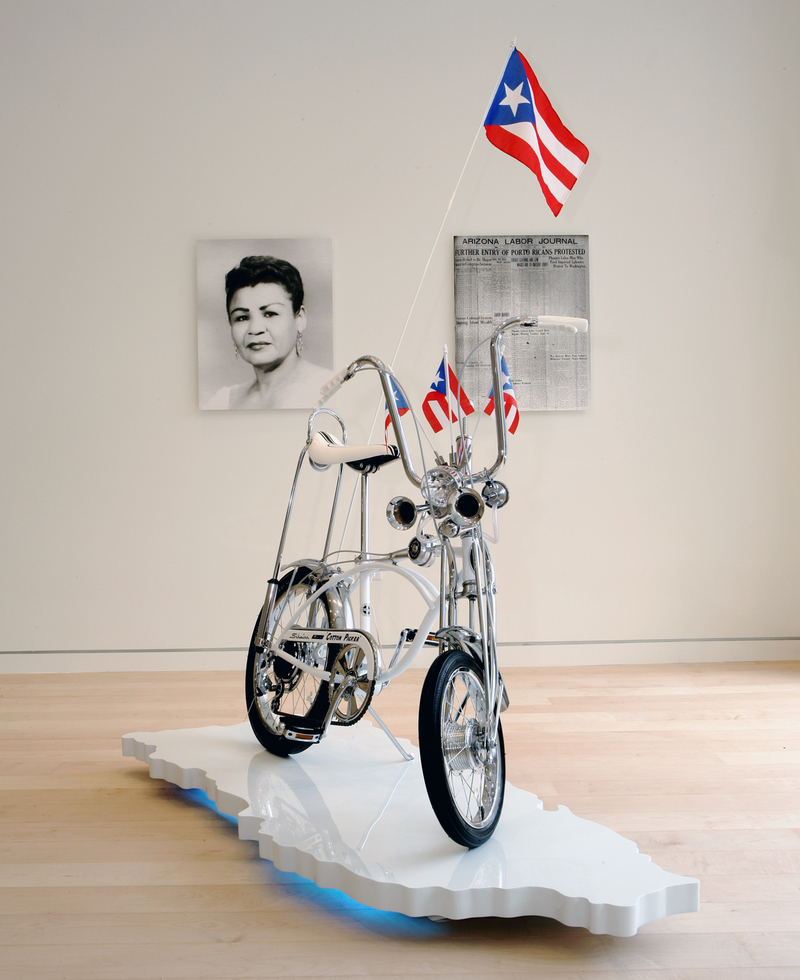
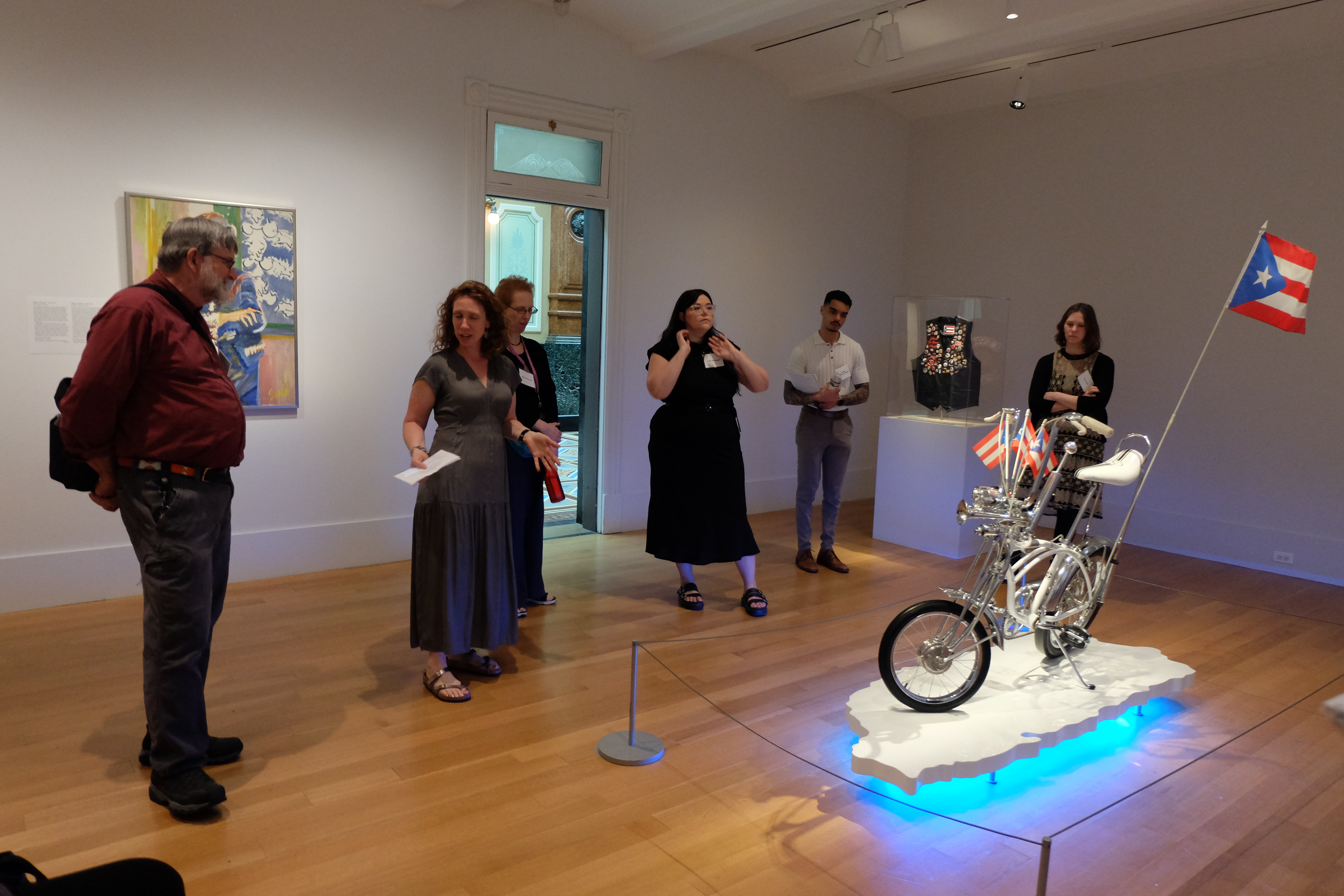 After White whetted our critical thinking appetites, she escorted us to a 3rd floor exhibit space, 20th Century Americans, for a 40-minute deep dive where we learned a Schwinn bicycle—when paired with a newspaper clipping, a black and white photo, and a leather jacket—could constitute a portrait. You may recall this thinking routine from my April 2024 blogpost: https://mcblogs.montgomerycollege.edu/pphi/sff/when-portraits-come-alive-activities-to-deepen-engagement-and-thinking-at-the-national-portrait-gallery/. The investigation of people, systems, power, and participation is a fantastic strategy for making the abstract concrete. But, in the spirit of sharing new content with you, dear reader, I will fast-forward into our final activity hosted by Lunder Education Chair for the Smithsonian American Art Museum, Carol Wilson.
In the grand open-storage space of the Luce Center, Wilson introduced us to a staggering work of art. Is it a gold-encrusted wave? A dinosaur skeleton? A precarious obstacle from the adventures of Indiana Jones? No! It is Bridge by Glenn Kaino. While too large to be displayed in The Shape of Power: Stories of Race and American Sculpture, an especially important SAAM exhibit in 2025. Bridge looks readymade for the Luce Center’s palatial ceiling. With Wilson’s prompting, we put our observation skills to work once more. Since it happens to be reproduced 200 times, the Fellows paid particular attention to the arm: its musculature, the calloused elbow, the gloved fist—all function as windows into a story once lost to time: October 16, 1968 at the Olympics Stadium in Mexico City. Tommie Smith has won the 200-meter running event, taken the podium, and—alongside bronze medalist John Carlos—raised his right fist in solidarity with the Black Power movement. He recognized that, as an Olympian, he lived a special version of his life, but, when he returned home, he would not be afforded full rights and respect. His brave action would pave the way for controversy, catalyzing in the dramatic decline of his athletic career. Coincidence plucked him out of obscurity when Kaino was encouraged to meet with him. They formed a bond that would revitalize Smith’s historic presence as an American, Olympian, activist, and more. Ultimately, Bridge immortalizes Smith’s arm in 200 life cast reproductions arranged to reflect the ups and downs of his life as well as his message to connect.
For Tommie and Glenn and awestruck museum visitors, it is an enduring message and mission, deserving of exhibition, celebration, and reverence.
Related Posts


This Post Has 0 Comments