

By Professor Tiffany Banks On Tuesday, September 30th , students from my COMM 108: Foundations…
by Professor Theron Coleman
The season of fall never fails to bring uncertainty in the weather. I was sure that on a Saturday afternoon in October, the weather would be cool, crisp, and calming. To my pleasant and sweltering surprise, October 6 was full of sun and wonder. The night before my English 101/011 students and I visited the National Museum of African American History and Culture (NMAAHC), I sent a text through the Remind App to remind my students of our meeting location at the corner of 14th Street and Madison. I told my students that I would be wearing a black hoodie and black jeans. I should have thought to wear brighter colors, but fall calls for warm, welcoming hues—browns, golds, reds, and, yes, black. I didn’t know whether the sweat billowing on my forehead was from excitement, nerves, or the 90-degree heat, but I took it as all of the above and welcomed my students with perspiring waves and shouts, “Here I am!” as we gathered at our meeting location. Each student wore a smile or a sigh of relief when they saw me, and I was relieved that they too felt the emotions of enthusiasm and heat exhaustion. Nonetheless, I was comforted to see my students bring friends and family for the adventure that lay ahead.
As we greeted each other with bright eyes and uncertainty, we formed a line and entered the museum with one goal: to find an artifact that celebrates our cultural identity. A simple task, but a challenging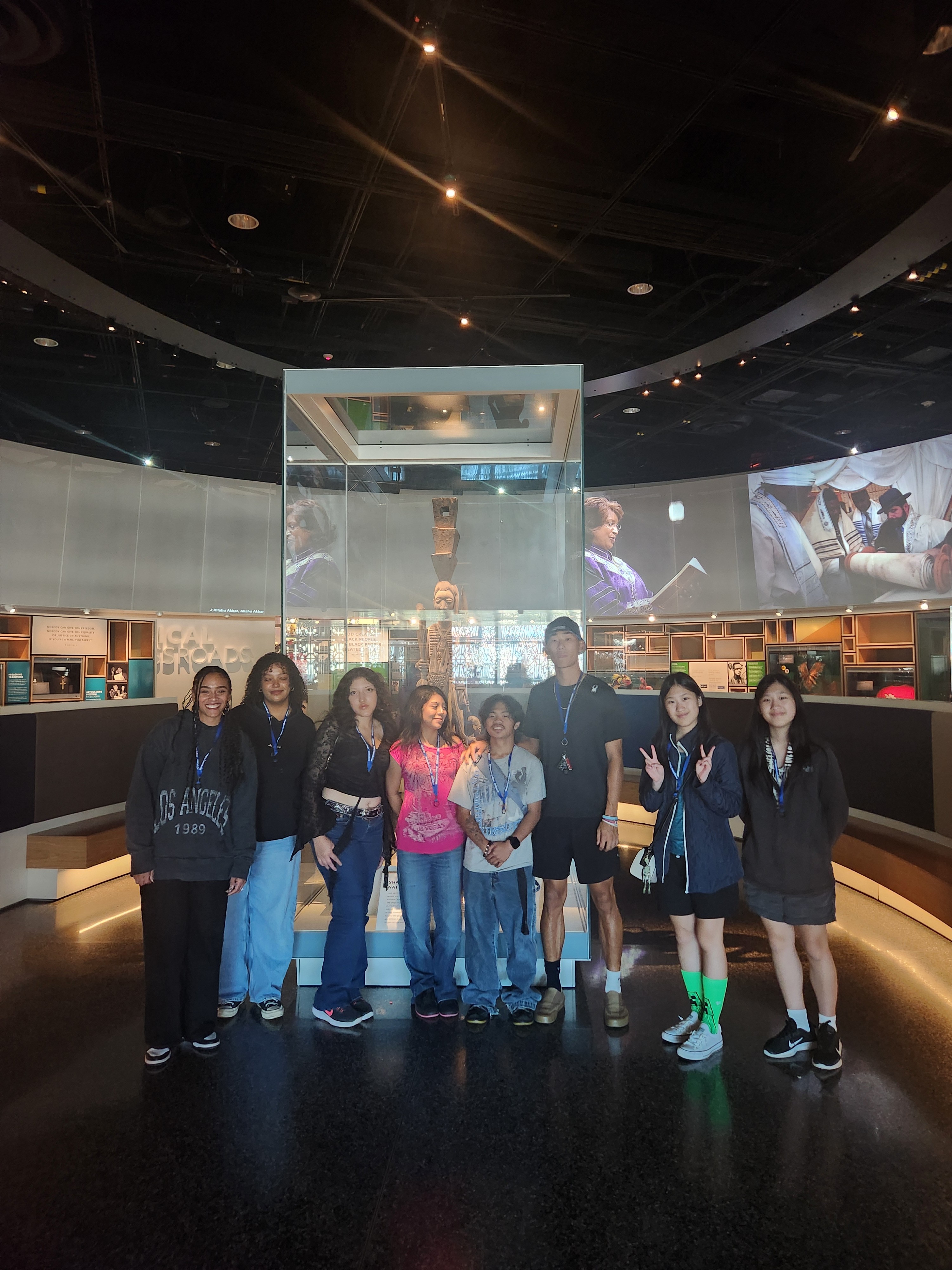 one nonetheless. As we passed security, we felt the coolness of the building, and our sweat no longer tried to take over our bodies; it retreated, as if afraid we were beginning our mission, and the fear was no longer necessary. Curiosity replaced it. We started at the “Cultural Galleries,” the museum’s highest level. This is where our exhibition lies, between two clear, gloss-frosted doors that unknowingly allowed us entry into the “Cultural Expression” exhibit. We immediately retreated, dispersing from our group and moving along the exhibition path—a circular layout—with half the class going clockwise and the other half counterclockwise. The outer ring depicts African American culture, while the inner ring displays artifacts of the African diaspora. I stood in the middle of the spherical exhibition and thought that the students did what any skillful museum connoisseur would do—dive into the exhibit, and dive they did.
After a few moments, I gathered my students back into the center of the circle and reinforced our objective.
PROMPT: Find an artifact that connects and celebrates your cultural identity.
For a while, I was unsure if my prompt was too vague. I mean, we’ve read many short stories to prepare for this objective. We analyzed the quilt in Alice Walker’s “Everyday Use” to see how such an object 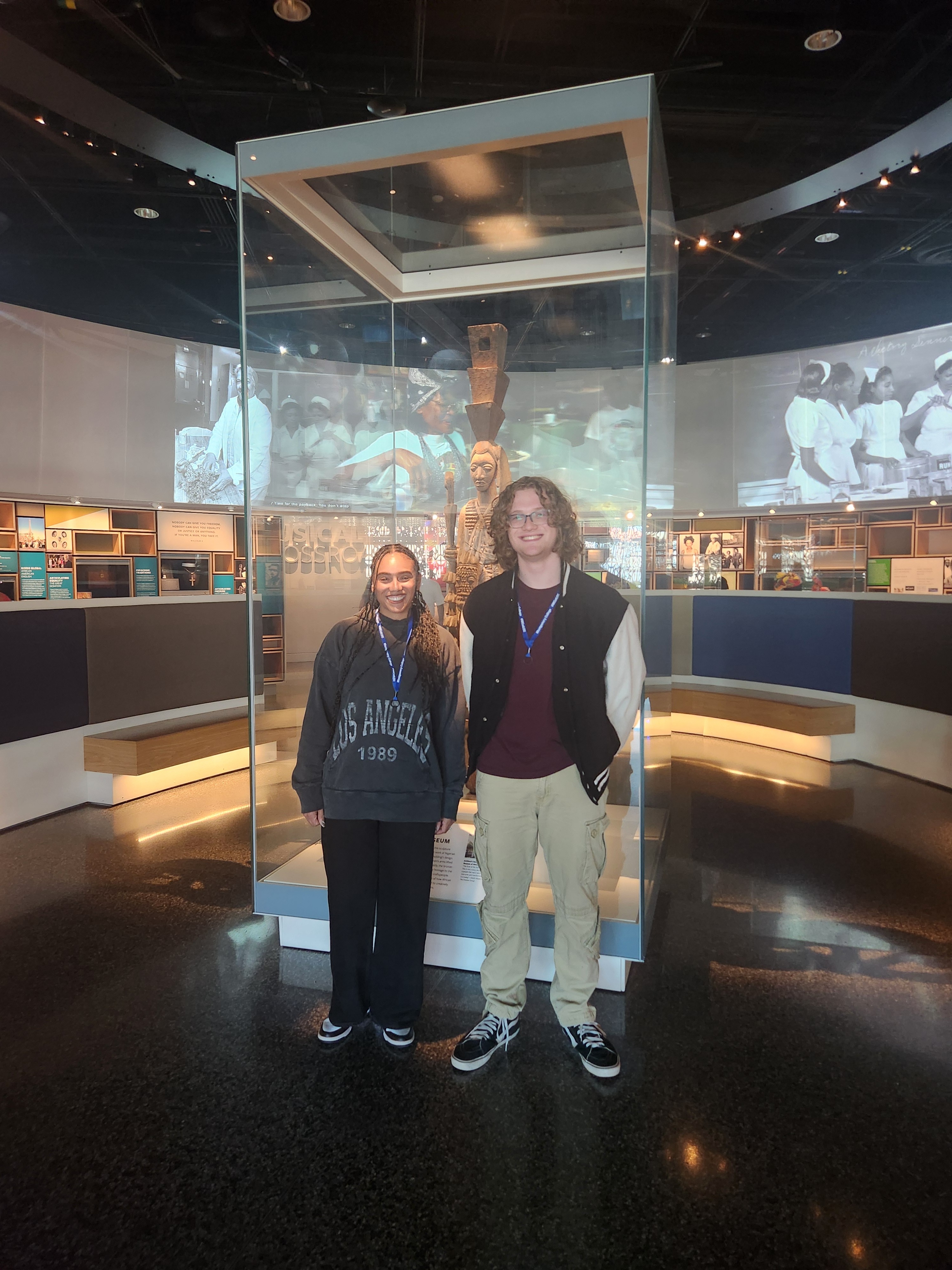 can celebrate culture. We read Amy Tan’s “Mother Tongue” to explore how culture and identity are intertwined with language. We created collections in the Smithsonian Learning Lab to reflect our personal cultural identities. We felt ready, and they were prepared. Once I gave my students the final reminder about our assignment, I let them go. Nods of agreement, crooked smiles, and raised eyebrows signaled that the objective was clear, and confidence grew as our group moved forward.
I followed my students, watching them as they took pictures of the artifacts, giggled with their friends, and interacted with the objects. In this particular exhibit, there were five forms of cultural expression: (1) style, (2) foodways, (3) artistry, (4) creativity, (5) language, and (5) movement. All of these forms gave them the freedom to connect to any pathway that evoked and strengthened their personal cultural identity. Not only did they connect to the “Cultural Expression” exhibit, but they couldn’t stop there. My “Culturally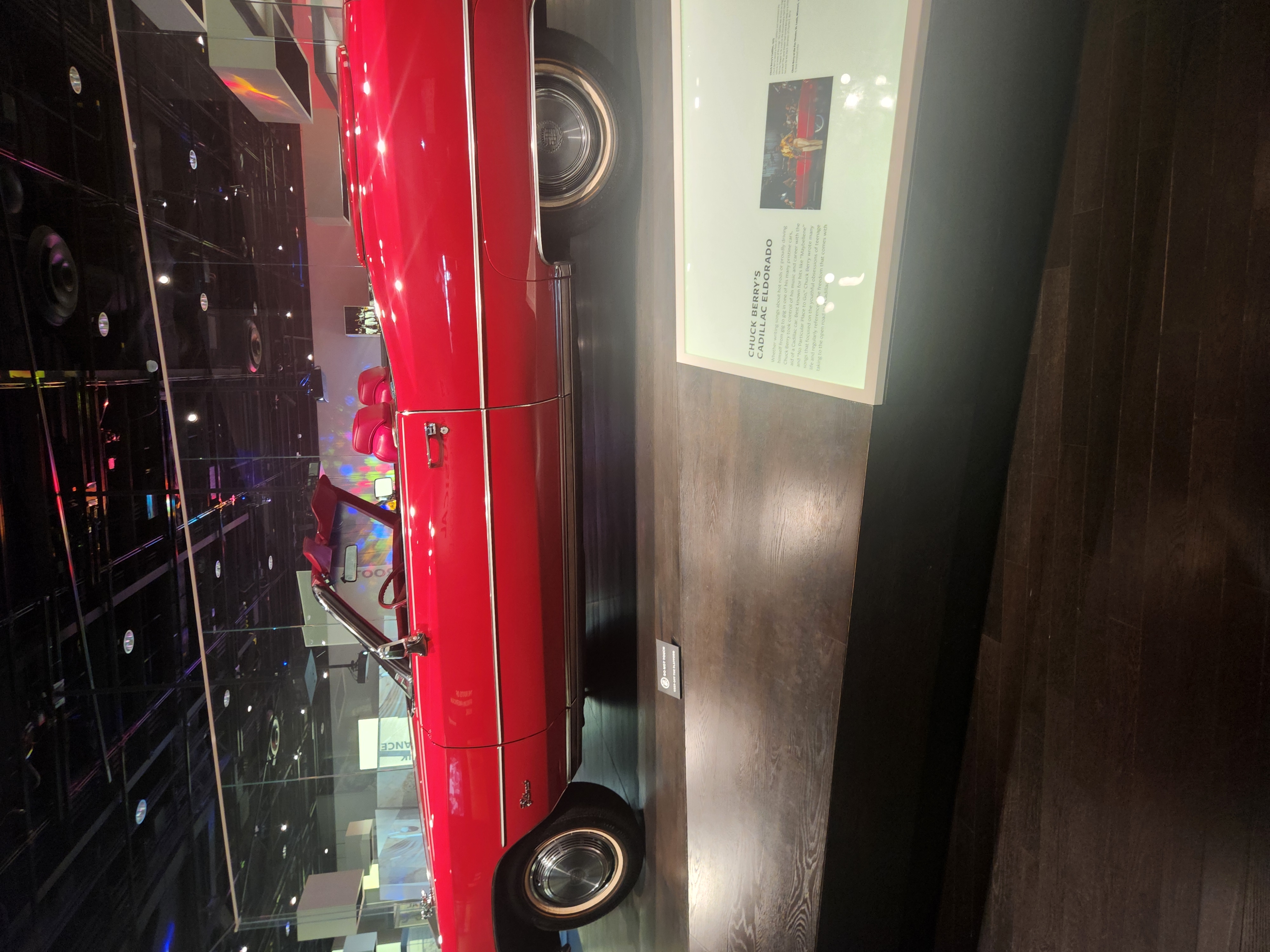 Us” project began to shift immediately. I now had to incorporate more exhibits. Why do you ask? Simple. My students were inquisitive. They not only found connections in our assigned exhibit, but they also wanted to see more. So, we set off and entered the “Musical Crossroads” exhibit, which showcased a wide range of musical genres. Chuck Berry’s red convertible Cadillac gleamed at the entrance, and my students were mesmerized from the red leather seats to the steel hood and chromed wheels. We connected the car’s symbolic meaning to its significance in American youth culture.
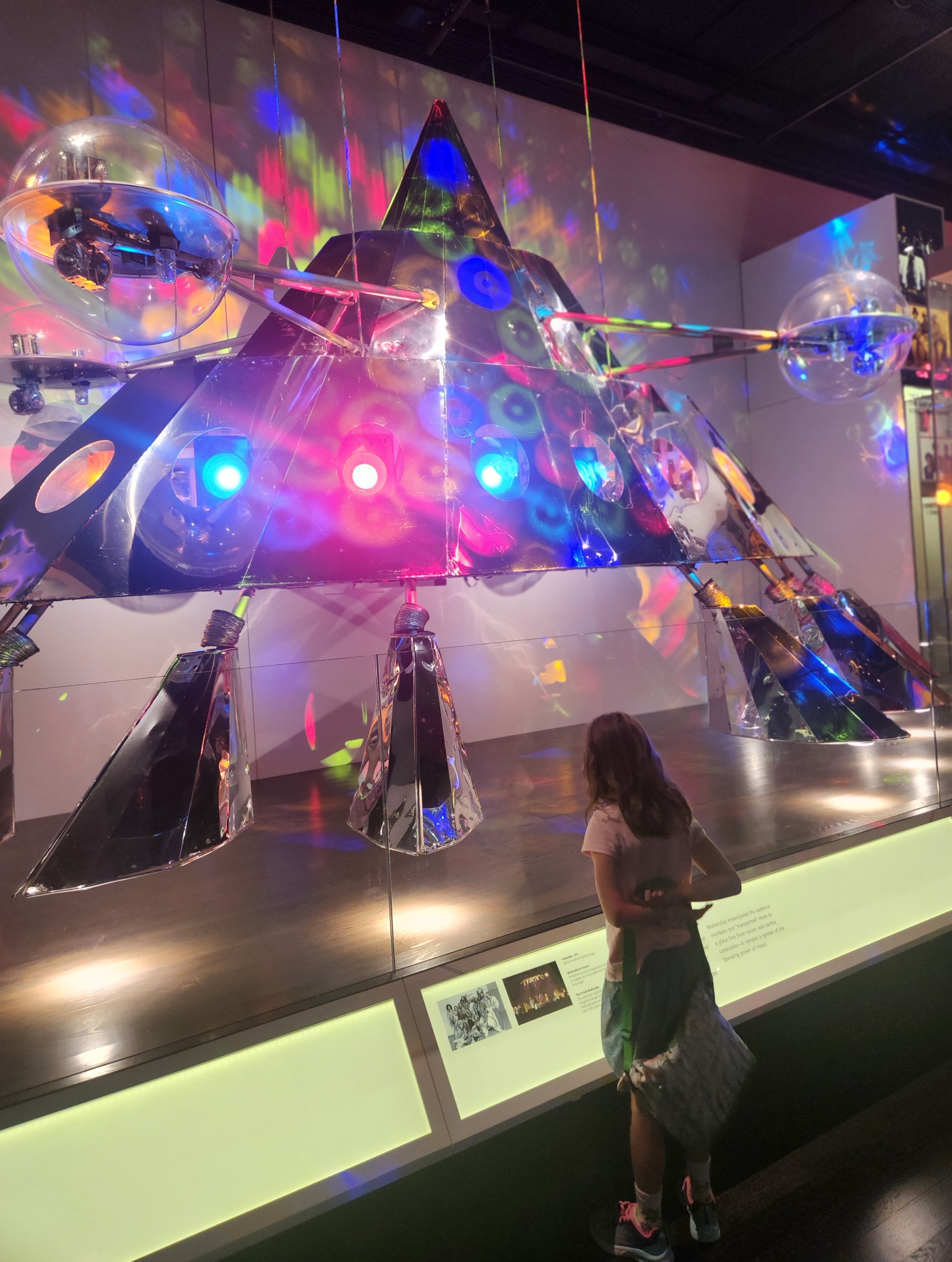 Our next attraction was the “1970s Parliament-Funkadelic Mothership.” The ship glowed with shades of blue and red. It seemed to beckon us, and we moved like spirits floating towards the Mothership, inspired by Star Trek. It appeared to connect with students through their family traditions of watching sci-fi films together. I realized that cultural identity didn’t have to be personal—it could be whatever inspired my students to celebrate who they are and where they come from. My students then interacted with the “Neighborhood Record Store.” We could choose from a variety of music genres, from hip-hop to soul, spanning the 1950s to today. I enjoyed introducing them to songs by Aretha Franklin and Public Enemy.
I realized that my proposal was changing right before my eyes, and a limitation on a specific exhibit was now null and void. Cultural identity is always evolving, so, of course, this objective would change too. I couldn’t expect them to stick to just one exhibit; they wanted to explore more, so we decided to split up and move through the museum independently. As I walked through, I saw my students continuing to discover more than I had anticipated. A few of them were checking out the “Power of Place” and “Making a Way Out of No Way” exhibits, while others were visiting “The Great Migration.”
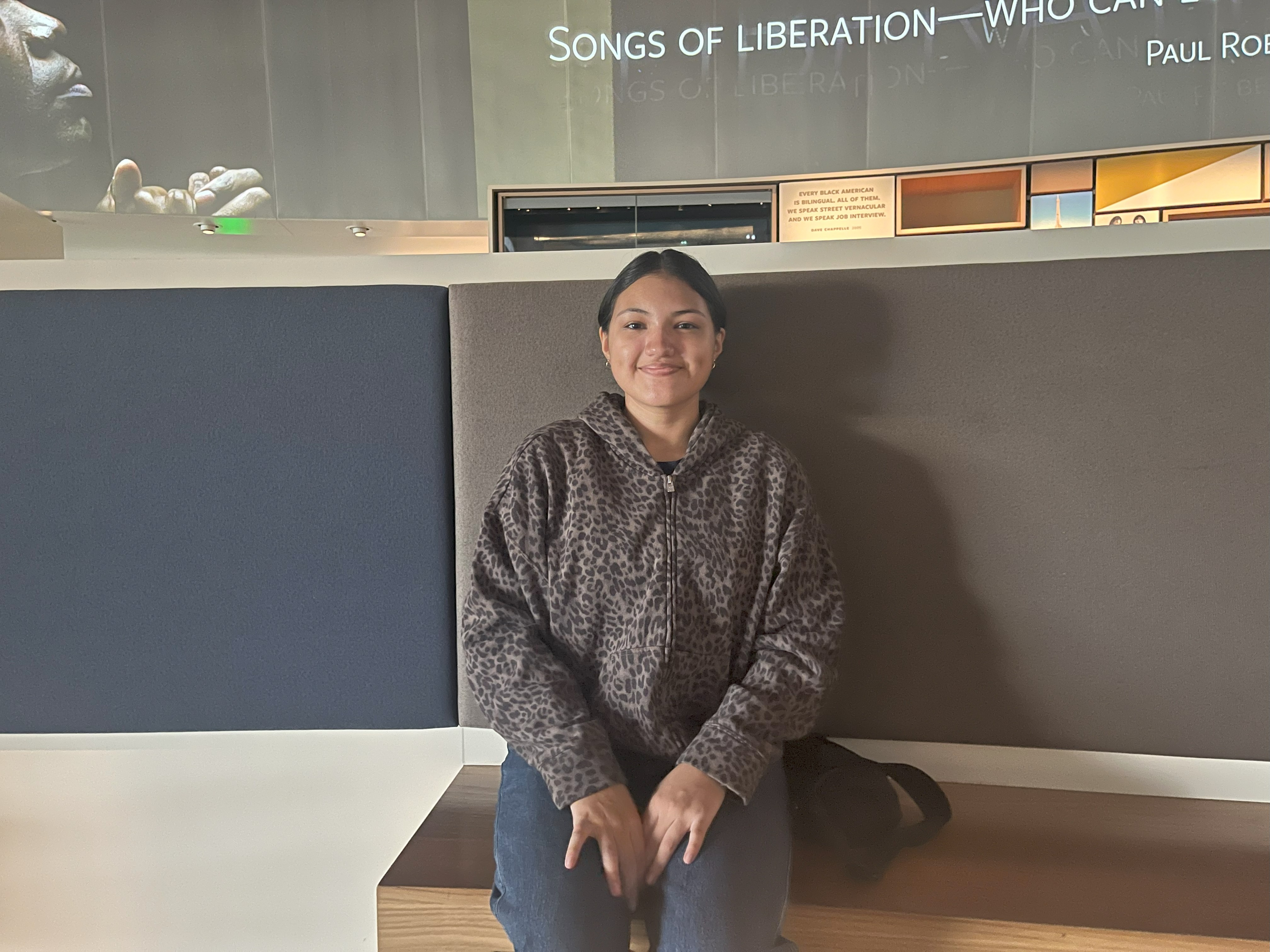
Isn’t this what learning is all about? Going beyond the limits of a subject and exploring new worlds. A few hours later, I decided to go back to the “Cultural Expression” exhibit. I wanted to see if any students were beginning their journey into cultural identity, and I did. I saw a few latecomers circling the exhibit. I noticed their faces. I waved. They smiled. I gave them a thumbs-up to see if they needed any help. I saw they were with friends, and I didn’t want to intrude on their experience. My students did not return with a thumbs-up; instead, they raised both hands in the air, waved, and smiled in recognition of me. They turned around and continued moving from one artifact to the next.
I would have changed a few things if I had to do it all over again. I don’t think I would have limited the exhibition to just one. I would have created a fun, interactive game, like some of my colleagues did, but I enjoyed the initial experience. I really liked seeing my students with their families and friends; there was a feeling of comfort between us. It was a sense of independence I wasn’t sure they could handle, but they did an outstanding job.
If there were any takeaways from my adventure, I could only think of one word – trust. I trusted my students to do what needed to be done, and they trusted me to take the trip.
As I left the museum, I noticed the sweat hadn’t returned to my forehead, and my nervousness and insecurity retreated. The sun stayed as confident as it was when we entered at noon. I looked back at the National Museum of African American History and Culture for one last reflection of the day. The bronze-colored framework shimmered and gleamed, and the streets buzzed with more people eager to go inside. I chuckled to myself, thinking about the mistakes and achievements of the day. I decided to focus on the accomplishments and learn from the errors in preparation for the next visit.
Related Posts

This Post Has 0 Comments