

Following a banner year of strong, applications, and after much deliberation, we are pleased to…
by Professor Erin Aust
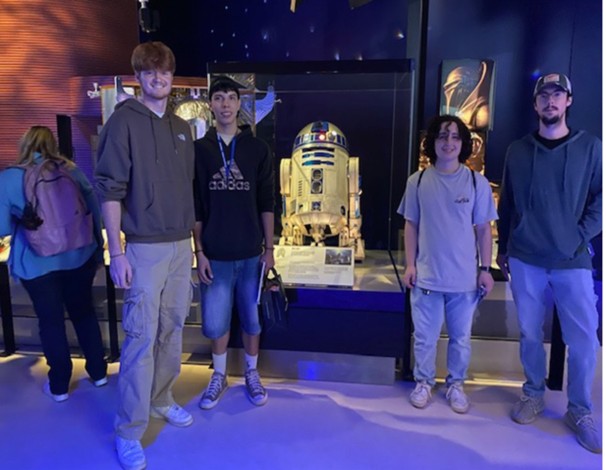
After weeks of anxious uncertainty, the Smithsonian National Museum of Natural History reopened its doors, allowing me to escort students from my ENGL101 + 011 class through two of its exhibits, 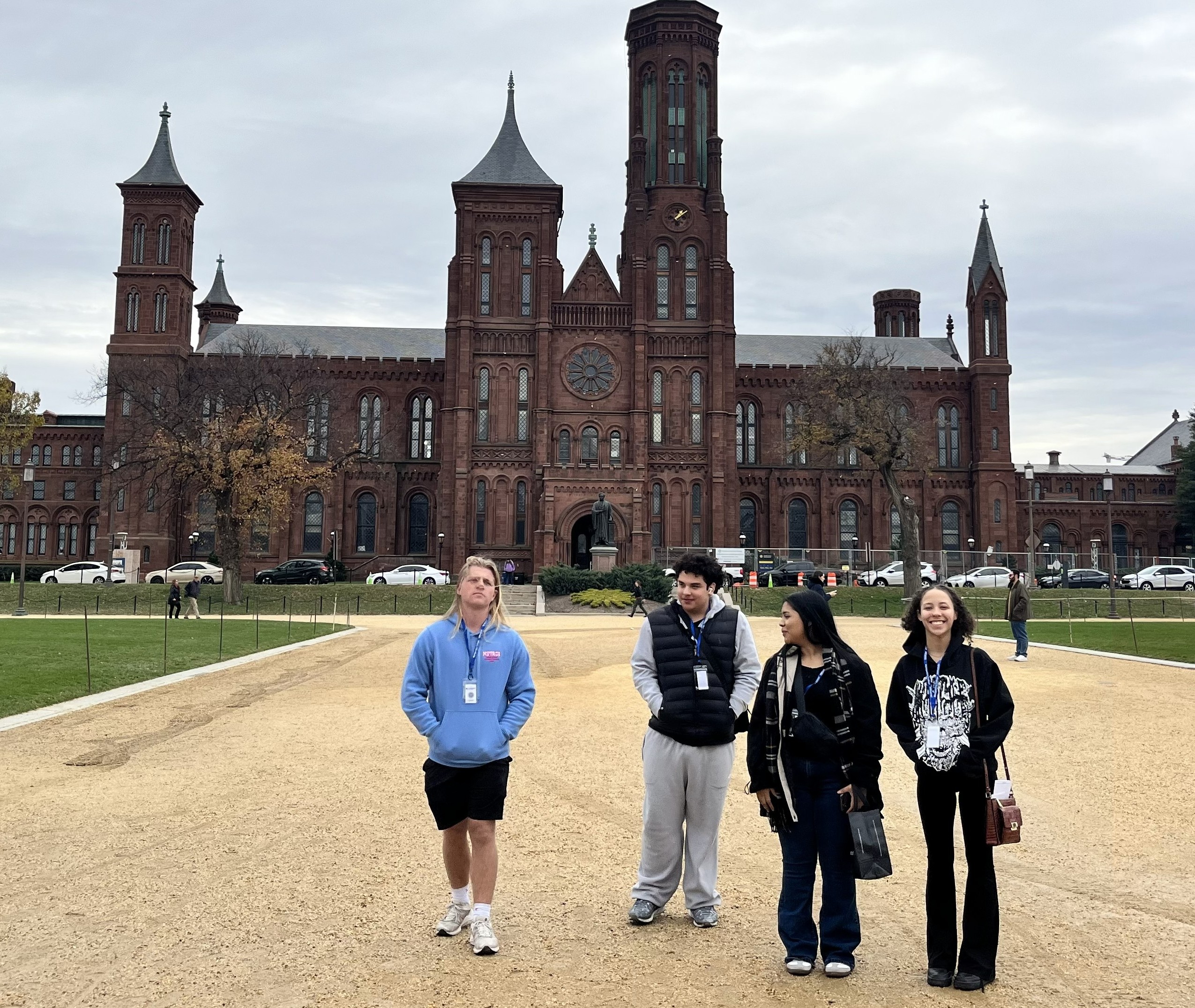 Journey Through Deep Time and Light’s Out on November 18th and 22nd.
They did not set out to learn all they could learn about dinosaurs or light waves. Rather, their mission was to explore the different stories told by each exhibit: the story of humankind’s impact on the environment told through the lens of Deep Time and the story of humankind’s relationship with the night sky told through the lens of Earth Optimism. Together with a range of resources made available through the Smithsonian’s Online Learning Lab, these exhibits served as a way for us to explore different perspectives, ideas, and approaches to the issue of climate change.
The Assignment
The exploration of these two different exhibits and perspectives was one step of a larger assignment to write an argumentative paper on the topic of climate change.
As an English professor, it is my solemn duty to adore the writing process. I sing the praises of revision and delight over a thoughtful outline. I love each step, but my personal favorite is brainstorming. I love thoughts! I love the miracle of human consciousness! I also love finding new ways for students to work through the brainstorming process, especially ways beyond sitting quietly and hoping thoughts occur. It is hard to have profound and insightful thoughts by a due date, especially when you are also thinking about other classes, a job, your life, and everything else in the world.
So, I equipped my students with both a journal for recording their impressions and a BINGO card to help guide them to specific objects or find objects that evoked specific thoughts and feelings. With these in hand, I hoped they would have the space, time, and gentle guidance needed to help explore ideas as they worked through the exhibits.
Exploring Deep Time
The Deep Time exhibit was filled with both wonder and dread. Some students found unexpected joy in the dioramas as they marveled over the tiny details of tiny footprints, insect bites, and burrowed animals. Others were just excited to see the action-posed tyrannosaurus rex. Being close to something so old helped one student “understand just how old the earth actually is” and that “humans are just a tiny part of earth’s history.”
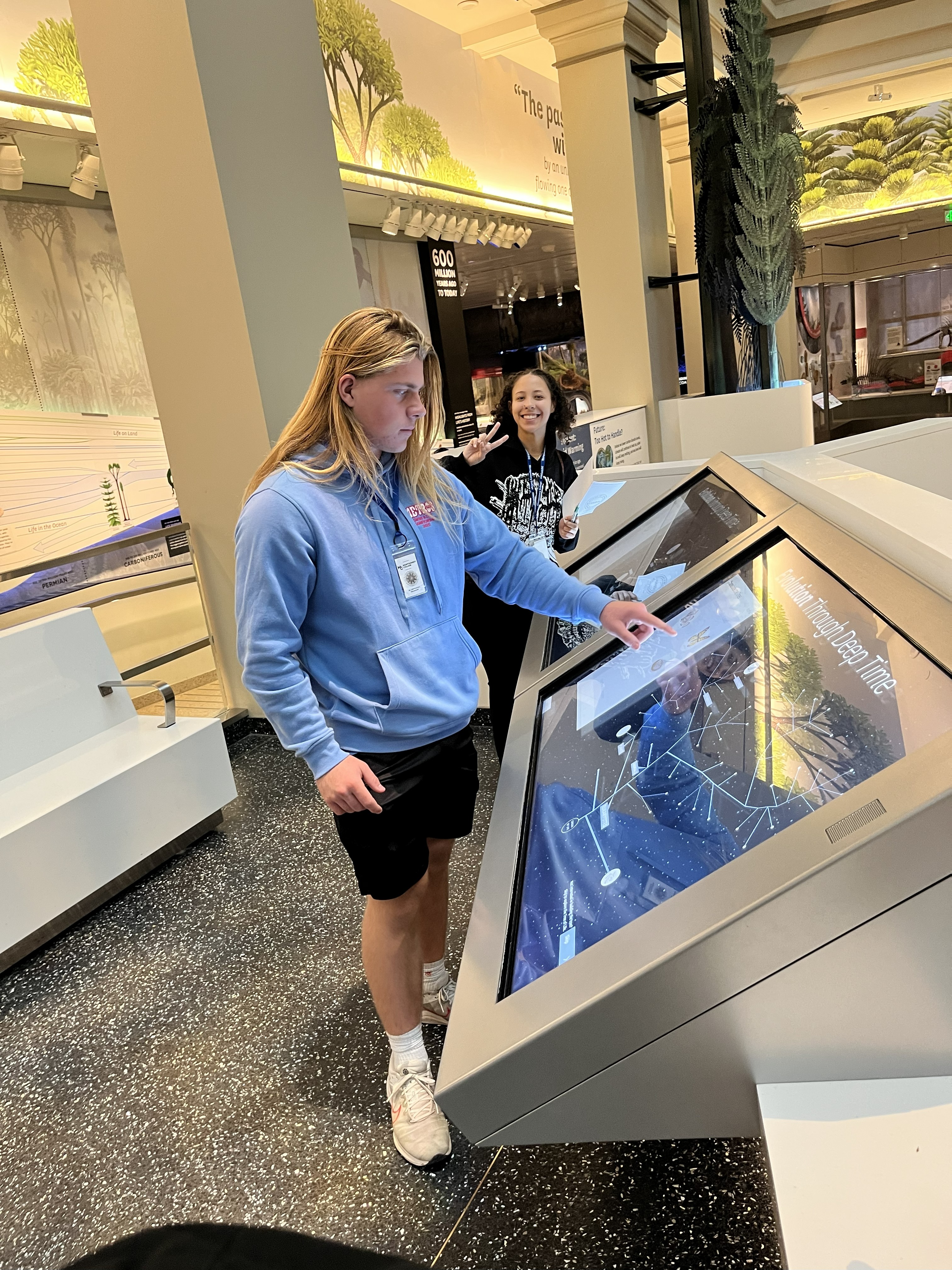 Students delightedly used touchscreens to discover the evolution of different species across time and were consistently amazed at unexpected relationships among the different branches of life. Working down the Age of Humans Gallery, students also discovered the correlation of human arrival with widespread extinction of large animals, which was met with dismay rather than amazement. When they came to a map of “The Human Footprint” depicting the human pressure on ecosystems, they were struck, but unsurprised to see the deep red of our own immediate locale.
Upon reflection, Journey Through Deep Time seemed to confirm what many students already suspected about the future of our planet: humans have an outsize and harmful impact on our ecosystem. The one glimmer of hope extracted by one student was the possibility that perhaps after humans inevitably destroyed Earth, a new sentient species might one day arise that would do a better job of it than we’ve managed.
Exploring Light’s Out
After exploring though the deepest depths of Deep Time, we moved upstairs to the temporary Light’s Out: Exploring the Night Sky exhibit. While this exhibit works hard to promote optimism in the face of the problem of light pollution, this optimism was sometimes overshadowed by what was, for many students, the discovery of a new type of pollution they hadn’t been previously concerned about. One student reflected that “everything we do pollutes the earth somehow.”
The emphasis on comparison made a big impact on students. Two photos of the same location with and without light pollution packed a punch in showing students the stark difference between their own view of the night sky and what it once looked like.
The exhibit’s ability to bring the issue of light pollution so close to home continued to have a big impact as students continued to explore. A map that slowly showed the dramatically increase in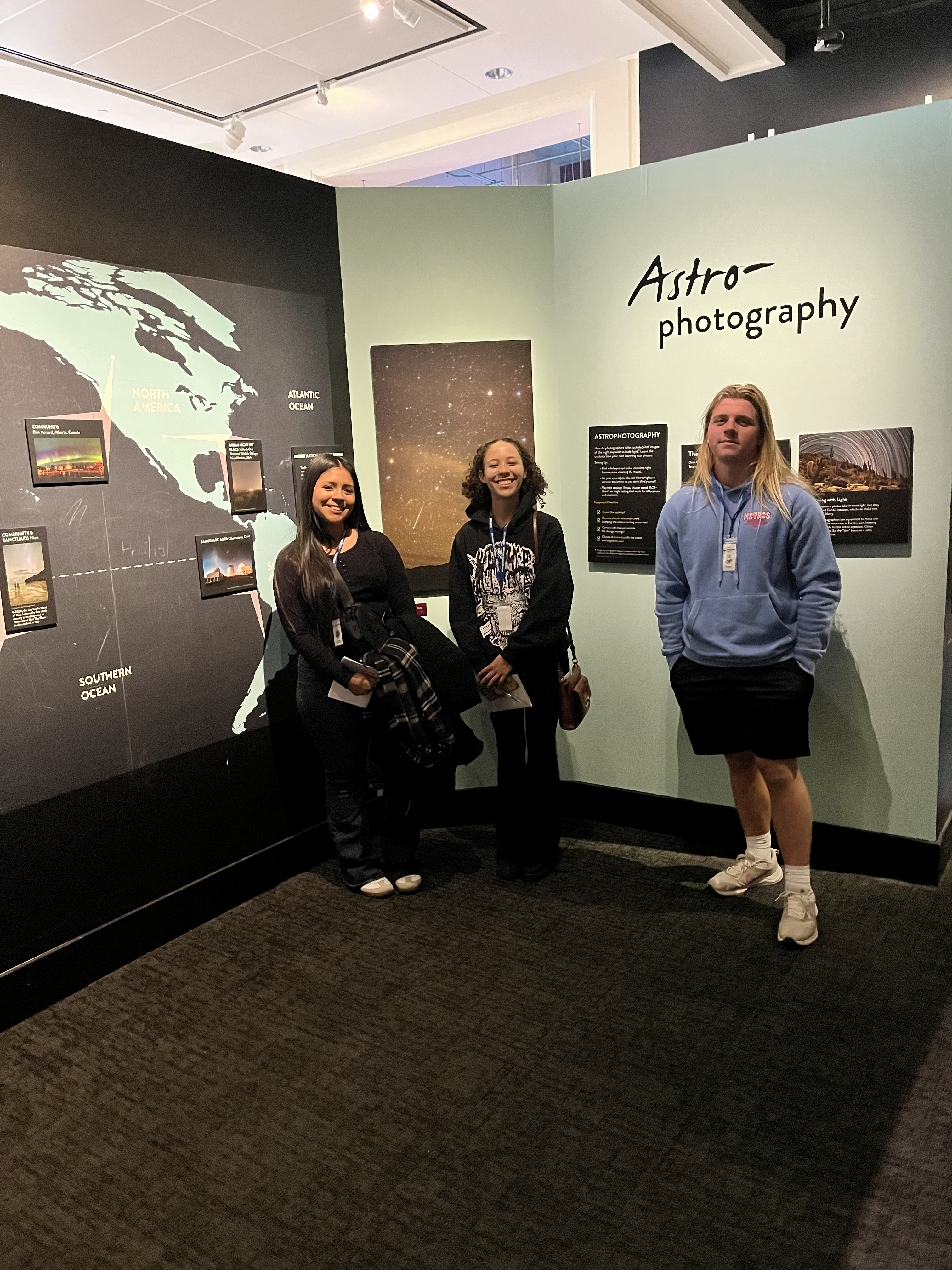 light pollution over the US echoed the same impressions from the “Human Footprint” map in Deep Time, again showing the impact of humans, especially in our own backyard. We also discussed the Bortle Scale to determine the severity of light pollution over the suburbs of Montgomery County. While a little depressing to acknowledge how seldom we see a decent number of stars, the exhibit did a marvelous job of making us stop and really consider the potential beauty as we reminisced about times we have seen clearer skies.
On the other hand, there were still glimmers of hope and a newfound appreciation for the night sky. The many high-exposure photos of the beauty of the Milky Way and the Northern Lights were so breathtaking and alien to the familiar skies of the Eastern Seaboard megalopolis that some students weren’t sure they were real or if they might be AI, but either way thought they were beautiful.
Reflections
Both exhibits have strong virtual presences, so this project translates well to a completely virtual experience. Students who opted out of the museum visit were still able to find thought-provoking exhibits pieces and resources through the Smithsonian Learning Lab. Until November 13th, I did not know if we would make it to the museum as it was still closed because of the government shutdown. Would it have been wiser to accept this reality and turn my full attention to developing the assignment around virtual resources? Probably. Did I? No.
Had I made a decision earlier on, I would have been able to spend more time and resources in preparing my students for one method of exploring ideas over the other, which might have been beneficial.
Still, while Journey Through Deep Time is a permanent exhibit, Light’s Out is temporary and will be removed before the next semester. Given its impact, I am glad we were able to visit it. In the end, I think that the in-person experience was a valuable one though certainly one I hope to improve upon in the future. The in-person experience presented opportunities not easily replicated virtually. For one student, a display about ocean pollution in the neighboring Ocean Hall became a valuable resource for future thinking. For another, the in-person exhibits “made [common knowledge] more real and easier to remember.” It would be difficult to otherwise replicate these moments of se
Related Posts

This Post Has 0 Comments