

Following a banner year of strong, applications, and after much deliberation, we are pleased to…
by Professor Cassandra Carter
Date of Visit: November 19
Introduction
On November 19, students in Sociology 100 participated in a virtual visit to Julia Child’s Kitchen at the National Museum of American History. The purpose of this experience was to apply sociological concepts to an everyday domestic space and to examine how food, kitchens, and cultural practices serve as sites of identity formation, technological change, and social meaning. The activity combined visual analysis, guided discussion, and reflective debriefing to support students in developing a sociological lens.
Preparing the Sociological Lens: Pre-Visit Reflection Activity
To establish a foundation for sociological inquiry, the class engaged in a preliminary exercise analyzing four images depicting individuals eating in different social contexts. Students were asked to describe what they observed and to identify the social meanings embedded within each scene. This exercise illuminated how food practices can express cultural identity, reinforce or challenge inequality, and serve as moments of comfort, community, tension, or resistance. The activity encouraged students to recognize that ordinary interactions with food are shaped by broader social forces, priming them for the subsequent museum experience.
The Virtual Visit: Julia Child’s Kitchen as a Sociological Artifact
The virtual tour offered students a detailed view of Julia Child’s kitchen, preserved by the museum as a culturally significant space. Prior to the tour, many students were unfamiliar with Julia Child, reflecting generational shifts in media, celebrity, and culinary culture. A brief biographical video provided essential context and underscored Child’s influence on American cooking and domestic life.
During the visit, students were guided by three central sociological questions:
- Why was this kitchen deemed valuable enough to preserve?
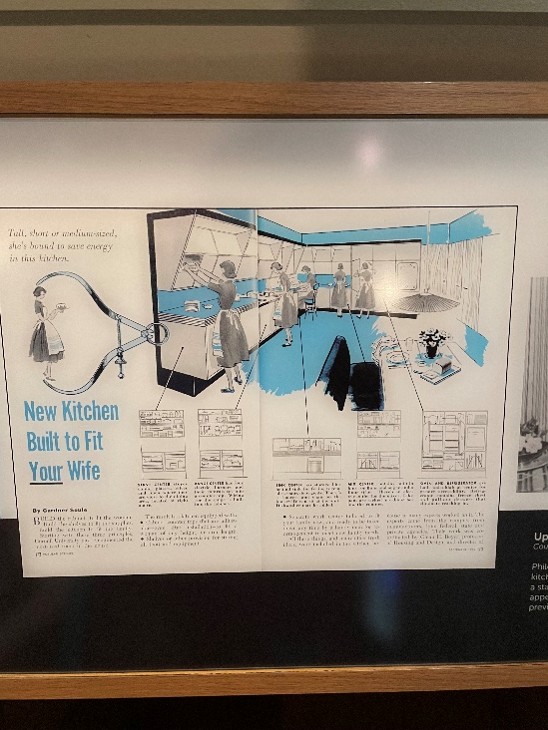
- What technologies are visible, and what do they reveal about the evolution of domestic labor?
- How does this kitchen compare to the kitchens students grew up with or see today?
Students noted the high degree of intentionality in the organization of the space, the prominence of specialized tools and appliances, and the ways technological innovation shaped mid-20th-century cooking. Discussions highlighted issues of gendered labor, domestic expertise, cultural memory, and the intersection of public and private life. As one student observed, for Julia Child, the kitchen functioned as “the beating heart and social center of her household,” underscoring the emotional and relational significance of domestic spaces.

Post-Visit Debrief: Access, Inequality, and Sociological Insight
During the debriefing session, students reflected on their experience and connected the exhibit to larger sociological themes. A notable finding emerged from a brief class survey: approximately 70% of students had never visited a museum before. Their explanations included limited exposure, lack of knowledge about museums, or lack of time, which sparked conversation about unequal access to cultural institutions.
This discussion broadened into an exploration of how food and domestic spaces can function as:
- Sites of cultural continuity
- Spaces of comfort or conflict
- Locations where gender and labor expectations are reproduced
- Indicators of class and technological change
- Carriers of memory and identity across generations
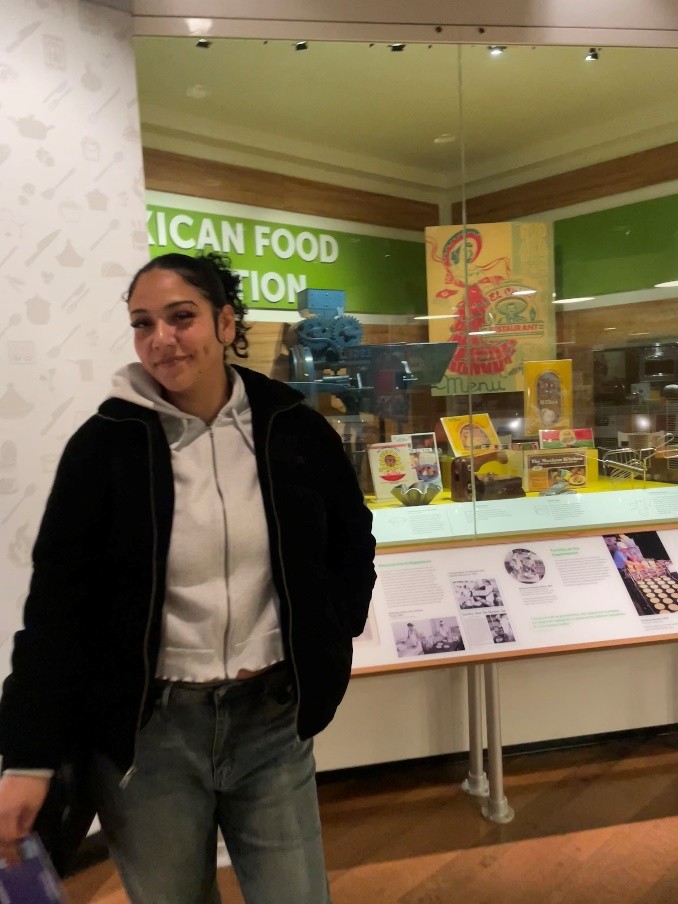
Students who later visited the exhibit in person for extra credit submitted video reflections, describing how the experience deepened their understanding of how food practices shape their own cultural identities and social experiences.
Conclusion
This virtual visit functioned as a meaningful sociological case study, demonstrating that kitchens and culinary objects are more than functional spaces, they are cultural artifacts embedded with social history, gender norms, technological developments, and personal significance. Julia Child’s kitchen provided a tangible entry point for examining how everyday environments reflect broader social structures.
Ultimately, this experience underscored a central sociological insight: food is never merely food. It is a lens through which we understand power, identity, culture, and social change. The virtual exhibit enabled students to see the ordinary as sociologically rich, expanding their capacity to analyze and interpret the social world.
Related Posts


This Post Has 0 Comments