

By Professor Tiffany Banks On Tuesday, September 30th , students from my COMM 108: Foundations…
by Professor Mike McDavitt
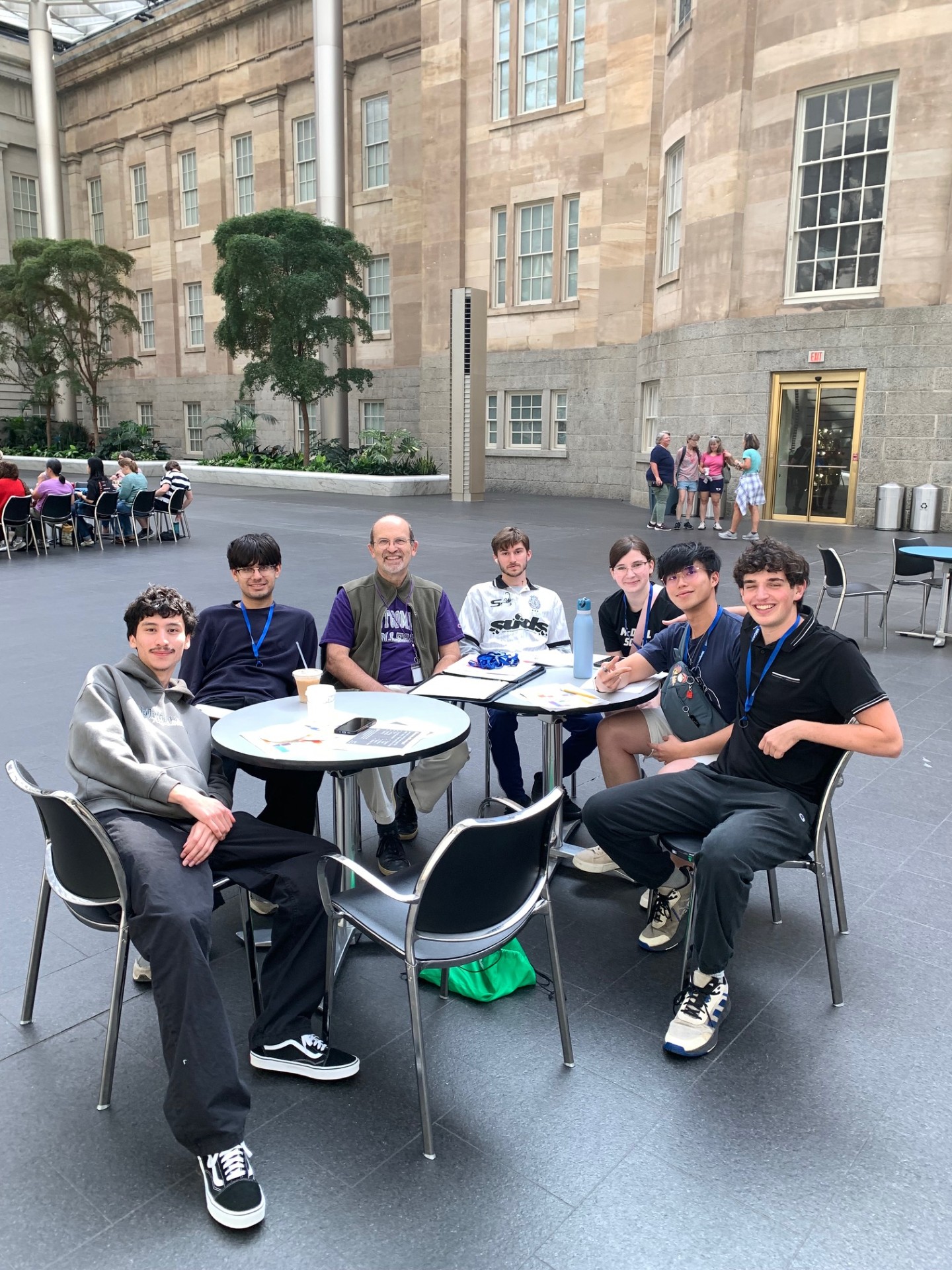
On October 4, 2025, six enthusiastic students from my environmental biology class explored the environmental sciences at an unlikely study site. The Smithsonian American Art Museum (SAAM) and National Portrait Gallery (NPG) served as our indoor “field” site for discovering and making connections between the people who make environmental science, the artists who are inspired to communicate an environmental message, and the interdisciplinary field of environmental biology through the lens of art.
The specific assignment, Environmental Biology Through the Works of Art: The Smithsonian Museum of American Art and the National Portrait Gallery, challenges students to bridge the arts and the sciences by: 1. exploring the elements of portraiture and the NPG’s portraits of seminal environmental figures, and 2. finding environmental messages or themes in artworks that reveal humankind’s relationship to nature or the environment. (For those unable to attend the museum, students take a similar journey of exploration through virtual sources, drawing on two corresponding art collections available on the Smithsonian Learning Lab.)
 [
[
Portraying Real Green People and Dinosaurs Too
To orient the students to the NPG, we started by discussing general portraiture and reviewing the primary elements of portrayal in the peaceful Kogod Courtyard as our backdrop. After discussing the elements of portrayal, I directed students to explore a part of the NPG collection with its diverse styles and subjects, and “observe” examples. Their mission was to peruse a gallery to locate an element in a portrait that appealed to them. We gathered again a few minutes later (before being completely swept away by the many rooms and pieces) and then reflected. One student loved the paper-cut medium of Toni Morrison, capturing her likeness with a simple cut of scissors, and another student noted the variety of brilliant colors in the portrait of Rabbi Sally Preisand. The Rabbi was surrounded by an array of sharp colors, with her smile as a source of light and illumination.
We then shifted the experiment to observing the art of portraiture through works of noteworthy individuals who have contributed to the field of environmental science or conservation. I hoped that students could see that people make science or advocate for environmental change; scientific discovery and social change do not just happen by themselves. Artists help us to record and see these real people, to codify a scientist or conservationist through artistic expression.
The NPG’s vast and diverse collection provided a rich opportunity to shift our attention to this task of narrowing the exploration to environmentally related figures, starting with Walter Alvarez’s portrait. After viewing Carmen Lomas Garcia’s sculpture of Alvarez for a minute and observing the unusual medium and composition of the piece, students noticed the “hidden” details. A dinosaur below and a meteorite overhead of the sitter. The odd choice of materials, metal. The backlit blue behind the coppery frontal matter. The artist had captured playfully hidden wonders that this geologist’s explorations had revealed. I explained that, through his geological studies of iridium deposits worldwide, Alvarez unveiled the probable cause of dinosaur extinction. This Garcia piece opened the eyes of the students (I believe) to a major point of the exercise. These sitters, seminal figures behind the scenes of science, are real people, and artists—you might say lab assistants—reanimate them before our eyes.
Following that, students wandered about in the portrait collection, ISO environmental VIPs. We spotted a death mask of the futurist and inventor of the geodesic dome, R. Buckminster Fuller, as we meandered around like a stream flowing through the gallery. We spent a fair amount of time discussing the symbols and clues in John Wesley Powell’s portrait, the first man to shoot the rapids of the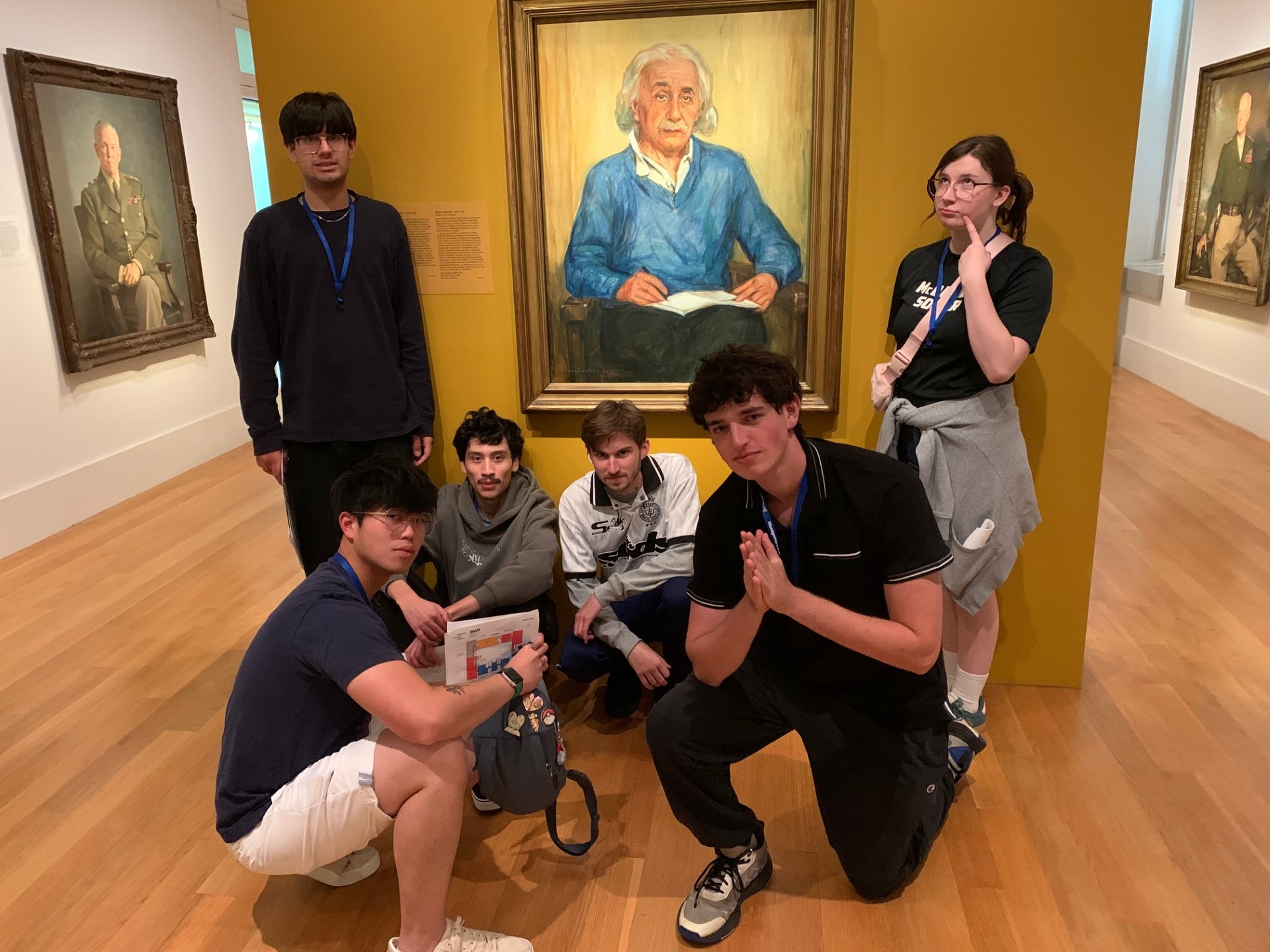 Green River. Further on, the unmistakable and promontory Albert Einstein offered a moment of relaxation and levity, as a figure from science whom everyone recognized immediately.
Winding Our Way Through Environmental Art
After the portrait focus, I engaged students in the second part of the assignment and made our way to the headwaters upstairs. We found ourselves paddling through artworks in the SAAM that told a story about humankind’s connection to nature and the environment. Less abstract than the portraits, I thought the artwork we observed on the second floor would help students plumb the depths of another inspiration for artists. Here, we would see how art documented natural beauty or conveyed ecocritical themes through seascape and landscape paintings.
The biggest surprise emerged at this point. I discovered an unexpected bend in the river: I realized that I needed to provide greater context and more background information for many students to make the connections I had hoped they would make. I had to help float the canoe.
The knowledge and experience of students were quite varied. I was discovering uncharted waters for many of my student paddlers. In addition, since the museum visit date was at the beginning of the semester, there were some themes and topics that we had not covered yet in lecture, so there was a need to provide impromptu historical explanations, more than I had expected. For example, many students did not know the meaning of the expression, manifest destiny, or were unfamiliar with the greatest ecological disaster in U.S. history, the tragic, unprecedented Dust Bowl chapter.
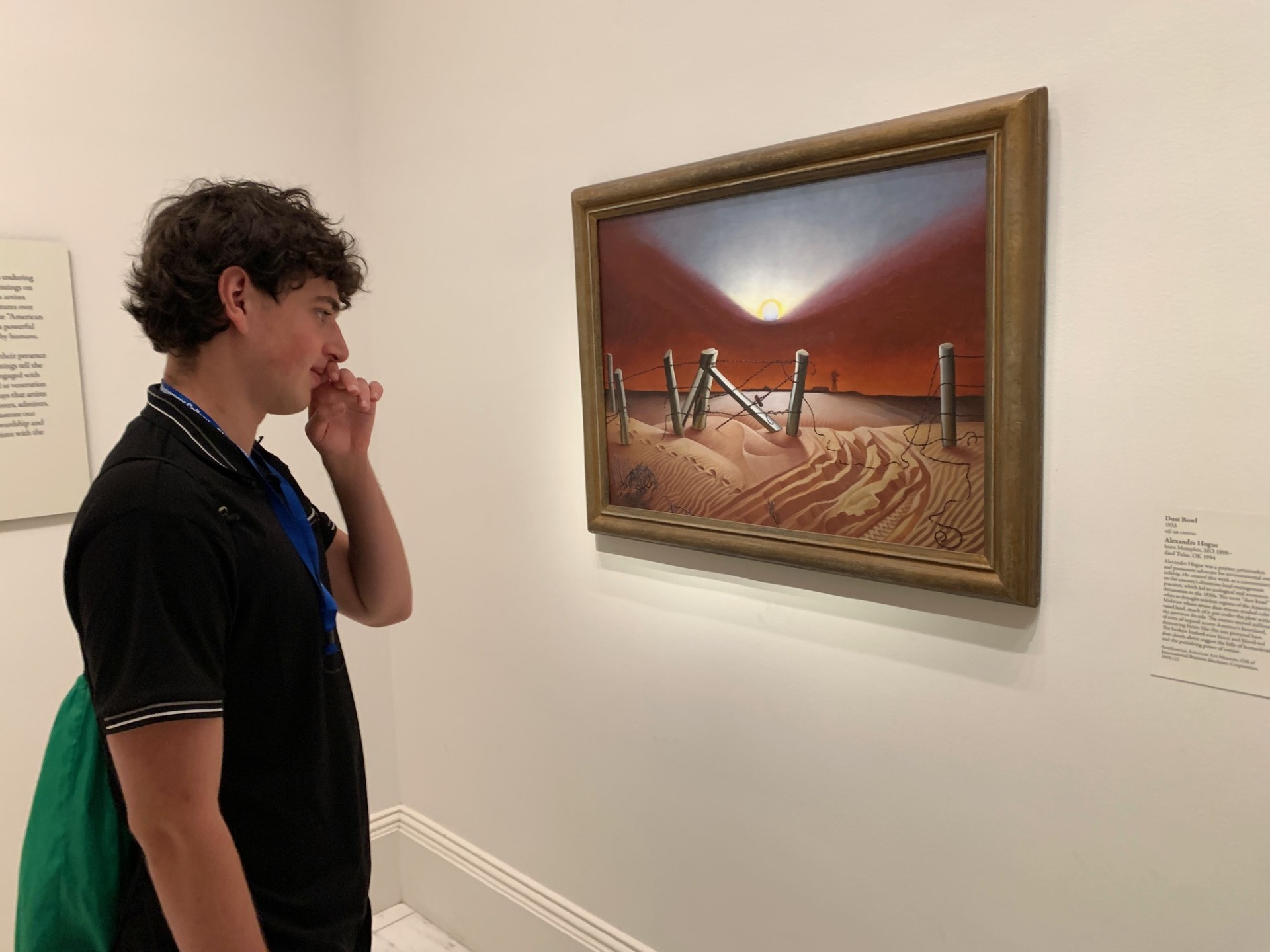 With this broader context, students were then better able to process the shades of meaning that they were seeing on the canvas and could dive deeper. For instance, while viewing the Dust Bowl painting by Alexandre Hogue, a student commented brilliantly on the painting, “It is as if the sun is bearing down on the dust cloud, weighing it down.” I then looked again and shared that same visceral impression so aptly observed. In my mind, I thought, “The sun is indeed bearing down on us, isn’t it?”
Paddling to Calmer and Clearer Waters
The somber Dust Bowl landscape, as well as the nearby American paintings encircling us in the same gallery area, made the greatest impression during our field outing. The Manifest Destiny, with its dystopian message of rising sea levels that submerge the Brooklyn cityscape, and the iconic Thomas Moran landscape, The Grand Canyon of Yellowstone, were wide-eyed favorites. With a back-and-forth conversation on historical milestones associated with these pieces, the students enlivened these works, much like the thriving aquatic sea animals were in flooded Brooklyn. Nevertheless, students also noticed the absence of humans in these eco-rich settings. Where was humankind? Why were we missing?
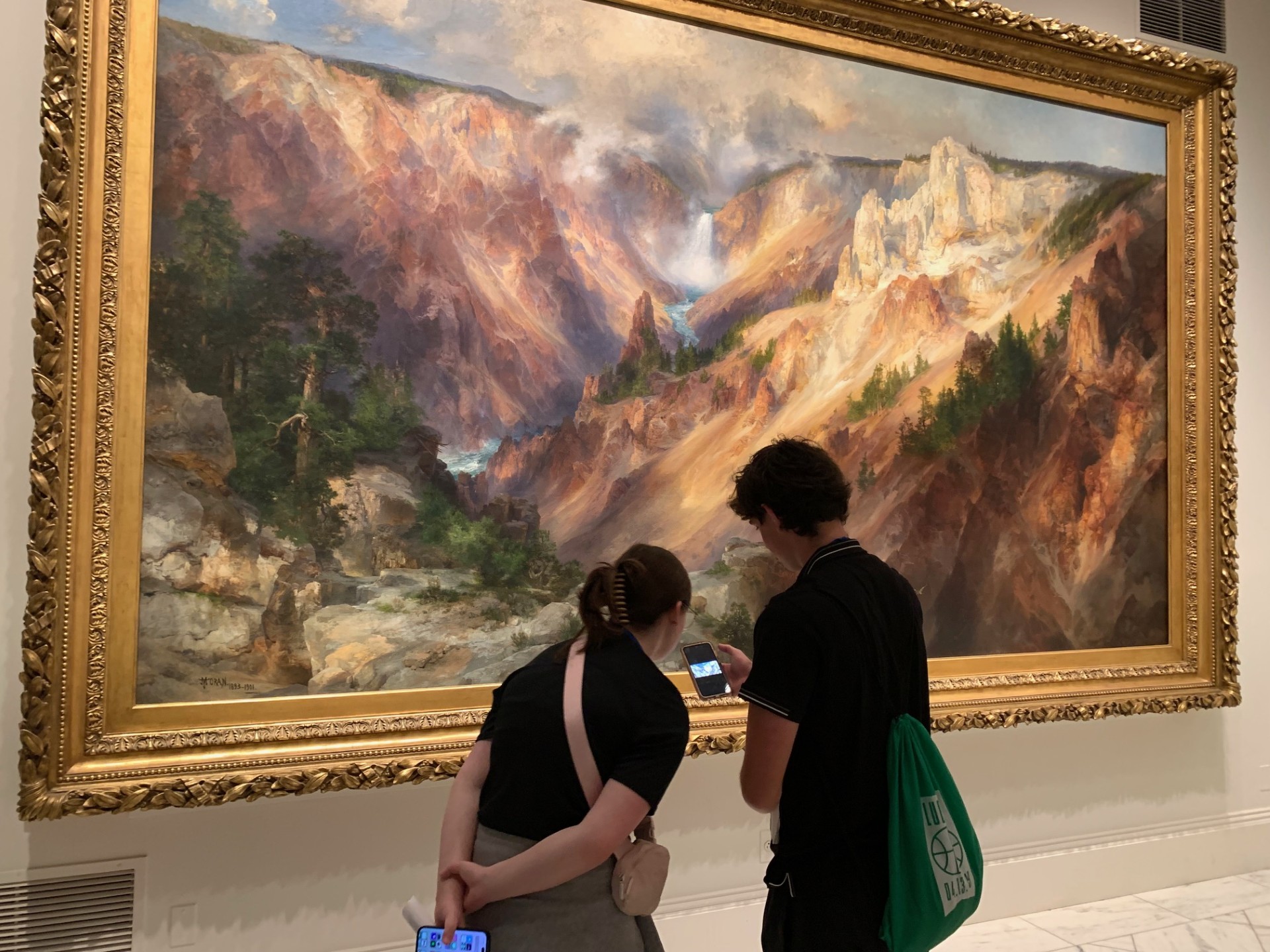
As I had hoped, students plunged into the deep waters of the Atlantic seaboard and the untamed rapids of the Yellowstone River. In small supportive strokes, I was the guide and life preserver, as they rowed through the paintings and applied their own shades of meaning to the canvases.
Related Posts


This Post Has 0 Comments