

By Professor Tiffany Banks On Tuesday, September 30th , students from my COMM 108: Foundations…
By Professor Orlando Genovese-Stewart
On September 24th, my CHEM135: General Chemistry for Engineers class traded the lecture hall for the halls of the Smithsonian. We spent the day at both the National Museum of Natural History (NMNH) and the National Museum of American History (NMAH) – and let’s just say, the trip had everything: scavenger hunts, science, Star Wars, and even a camel skeleton cameo.
The Scavenger Hunt That Kept Us Guessing
To keep the trip interactive, I challenged my students with a scavenger hunt full of quirky prompts:
- Find an object that lets us see really tiny things
- Find an object that uses a magnetic material to work
- Find an object that changed the way we travel
That last one was a standout of the day. While most people might assume engineering students would automatically think of airplanes or trains, one student proudly snapped a picture of a camel skeleton. Not wrong! Camels did revolutionize desert travel after all. It was equal parts clever and hilarious – exactly the kind of outside-the-box thinking I love seeing.
Why the Smithsonian?
This field trip wasn’t just about getting out of the classroom for a day. It’s part of a larger project I’m building with my students that uses Smithsonian museums as living classrooms. The goal is to connect chemistry concepts with the real-world materials, technologies, and objects that have shaped, and are still shaping, our world.
By visiting exhibits like Cellphones: Unseen Connections and Lights Out: Recovering Our Night Sky, students could see how chemistry ties into global supply chains, environmental ethics, and the technologies they interact with every day. Instead of just memorizing facts, they experienced chemistry as a way of understanding the big challenges and opportunities facing engineers today.
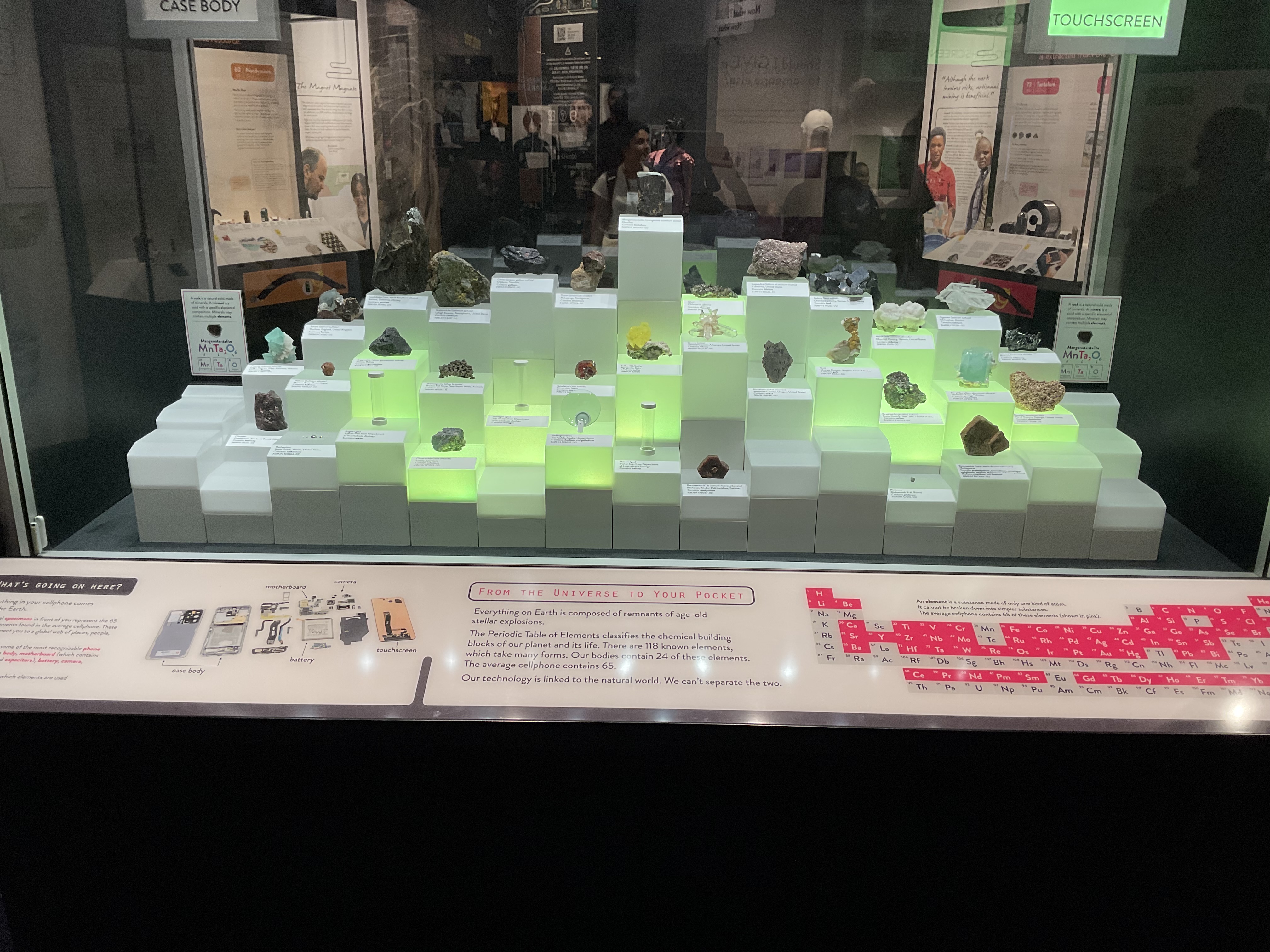
Cellphones: The Good, the Bad, and the Ethical
We dove deep into the Cellphones: Unseen Connections exhibit at NMNH. The students were surprised to learn just how many materials go into making the devices we use every day.
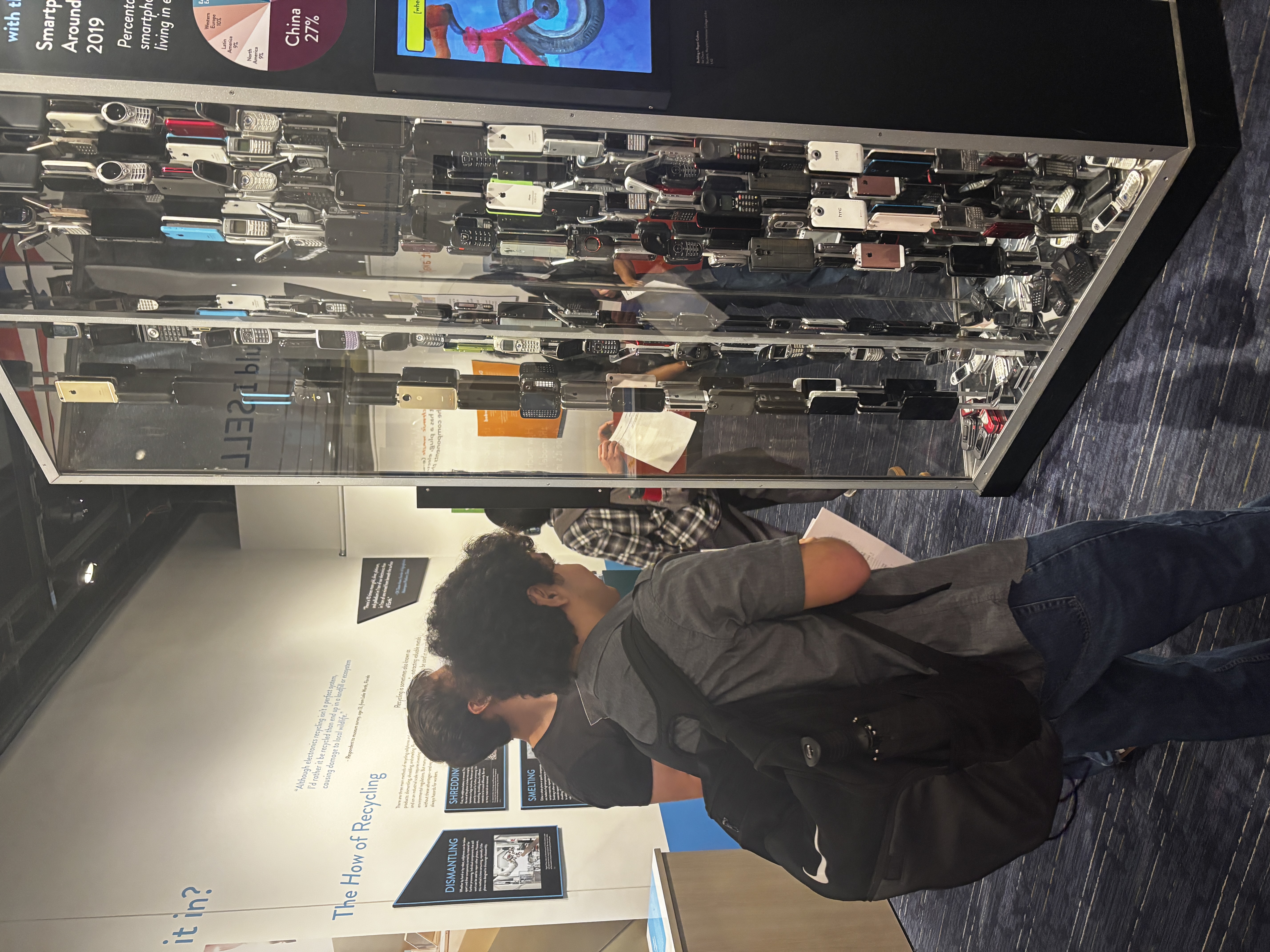
The cellphone tower of old devices stopped everyone in their tracks. Students laughed as they compared the “ancient” flip phones, with one joking that a model looked like it came straight out of Jurassic Park! While my students experienced it like a trip to the Stone Age, for me it was a wave of nostalgia seeing the phones I’d once owned. Beyond the humor, one student was especially struck by the ethical issues tied to tantalum mining in these devices – a powerful reminder that chemistry extends far beyond atoms and bonds, it’s also about people, resources, and the choices we make. It goes without saying that chemistry truly connects us all.
Lights Out: Thinking About Bats and Beyond
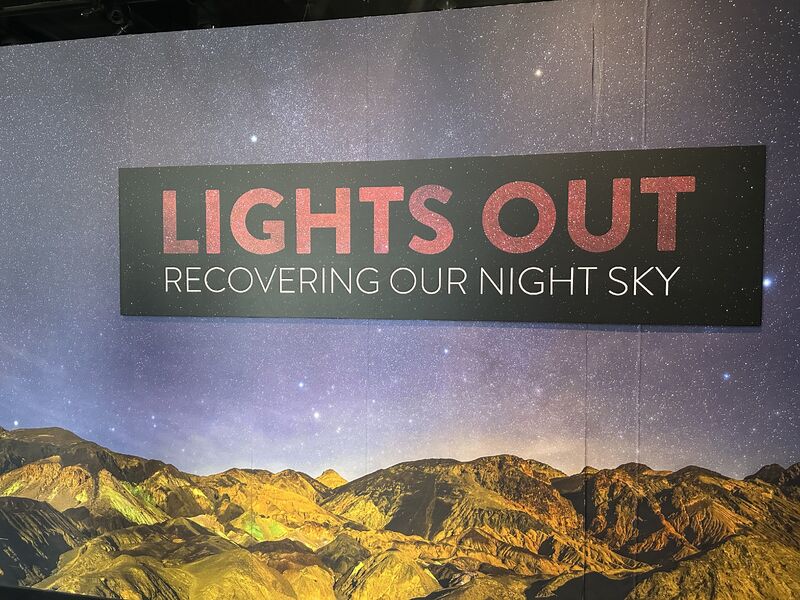
From there, we shifted to Lights Out: Recovering Our Night Sky, an exhibit about the hidden costs of artificial light. Students were drawn to the displays about ecosystems – one even stared at the bat specimens and quietly said, “I feel so bad for the bats because they are dead.” It was a touching, human reminder that science connects us not just to technology, but to the natural world as well.
A Professor’s Side Quest: NASA Earth Data
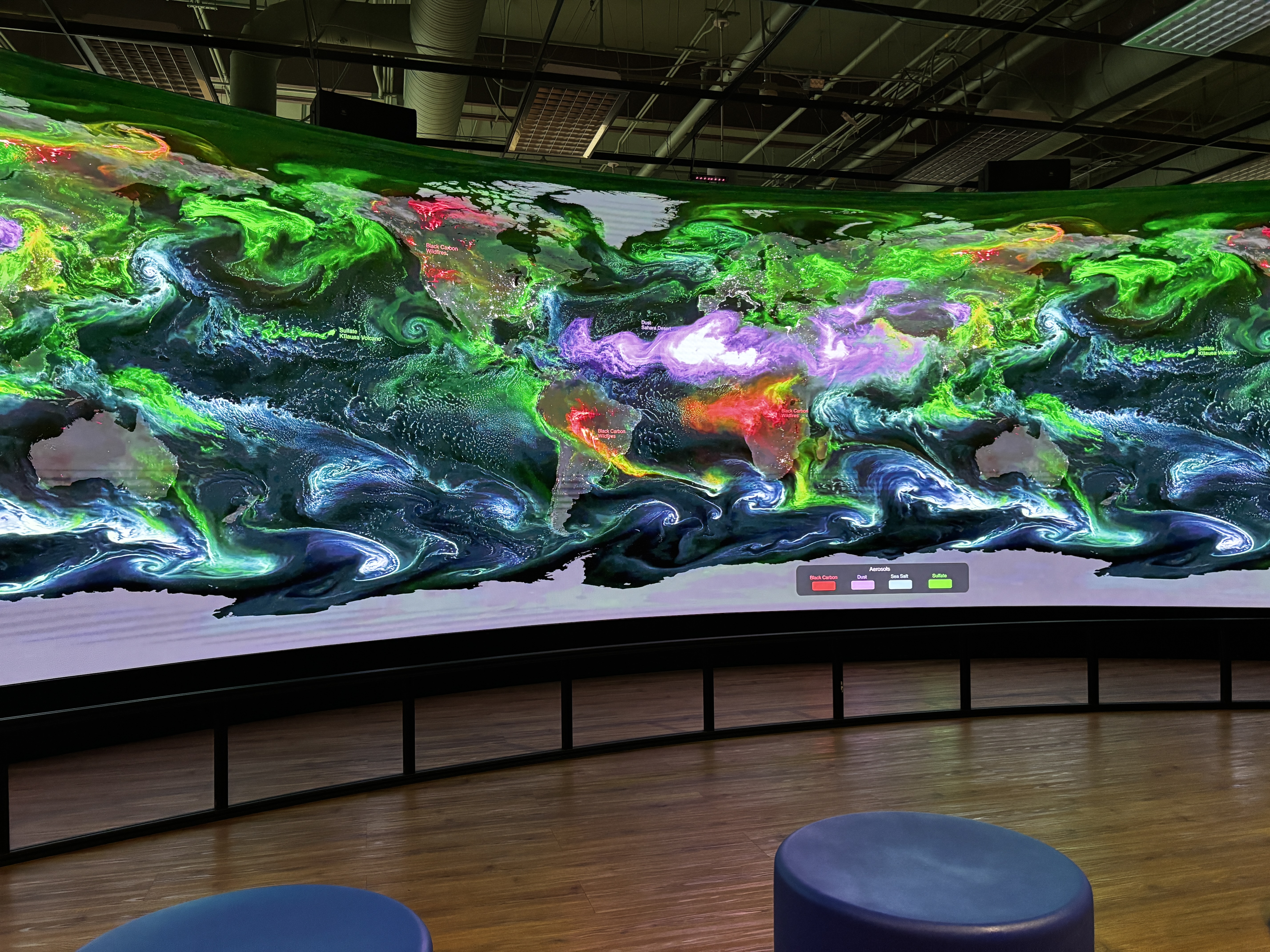
While my students were busy exploring the Lights Out exhibit, I slipped away into the NASA Earth Information Center. I’m so glad I did – it was absolutely mesmerizing.
The hyperwall displays real-time satellite data about Earth’s land, water, temperature, weather, and climate. Watching the data visualizations ripple and shift across massive screens was both striking and stunning. It wasn’t just beautiful, it was inspiring!
As I stood there, I couldn’t help but imagine all the ways I could use this exhibit in future Smithsonian projects. The connections to chemistry, engineering, and environmental ethics practically jumped out at me. By the time I left, my head was buzzing with new ideas for class activities and assignments. Honestly, it made me wish I could do the Smithsonian Faculty Fellowship all over again next year!
Group Moments Under the Giant Elephant
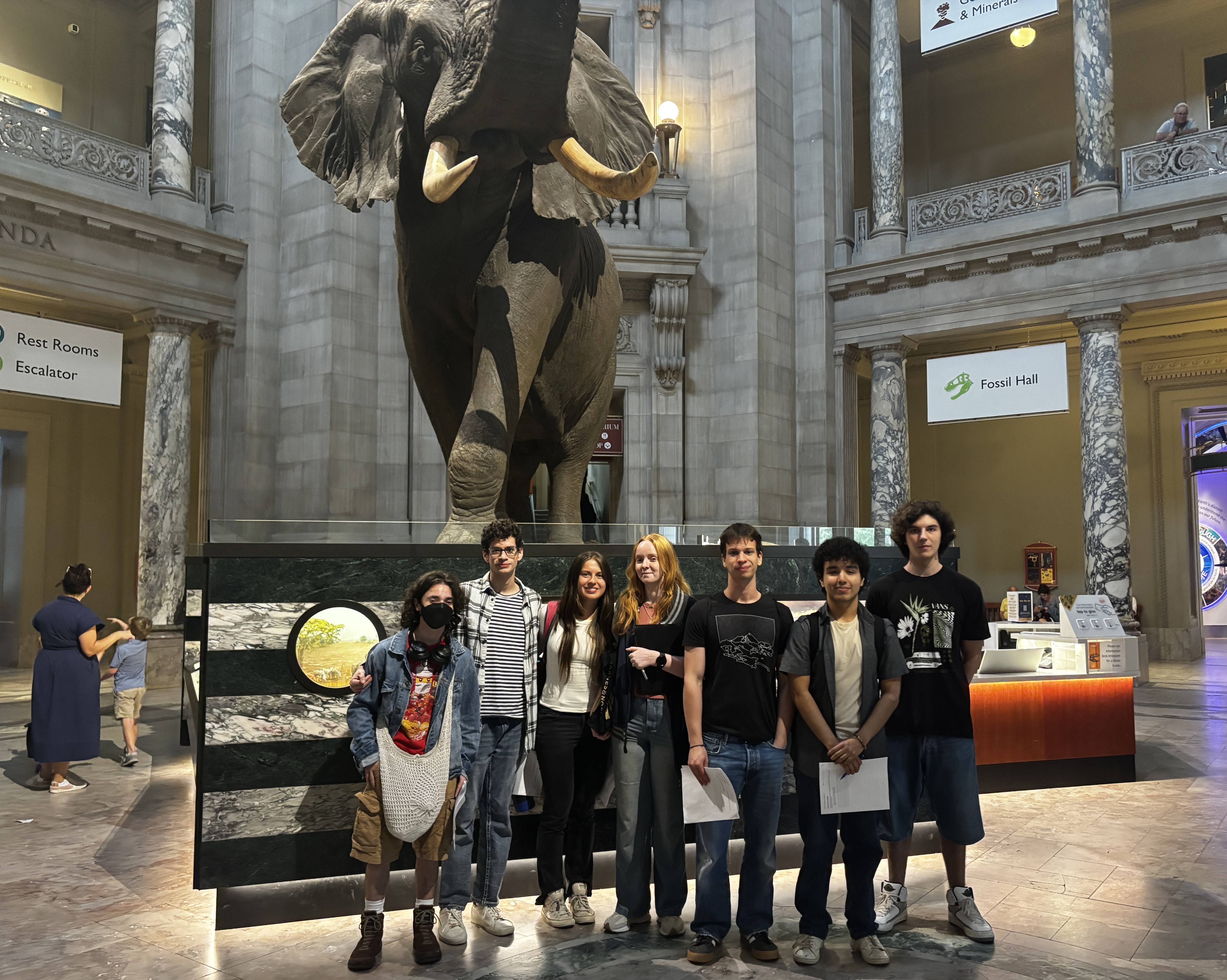
Of course, no trip to NMNH is complete without a group photo under the famous elephant in the rotunda.
It’s one of those classic Smithsonian snapshots, and for me, it perfectly captured the energy of the day – curious, excited, and full of discovery.
My “Evil Laugh” Plan Worked
Here’s where I confess: I slipped a few scavenger hunt prompts in that encouraged students to wander into other Smithsonian museums. By the end of the day, several told me they were planning to check out the National Air and Space Museum next. Mission accomplished *evil professor laugh..Mwhahaha*.
A Star Wars Finale at the American History Museum
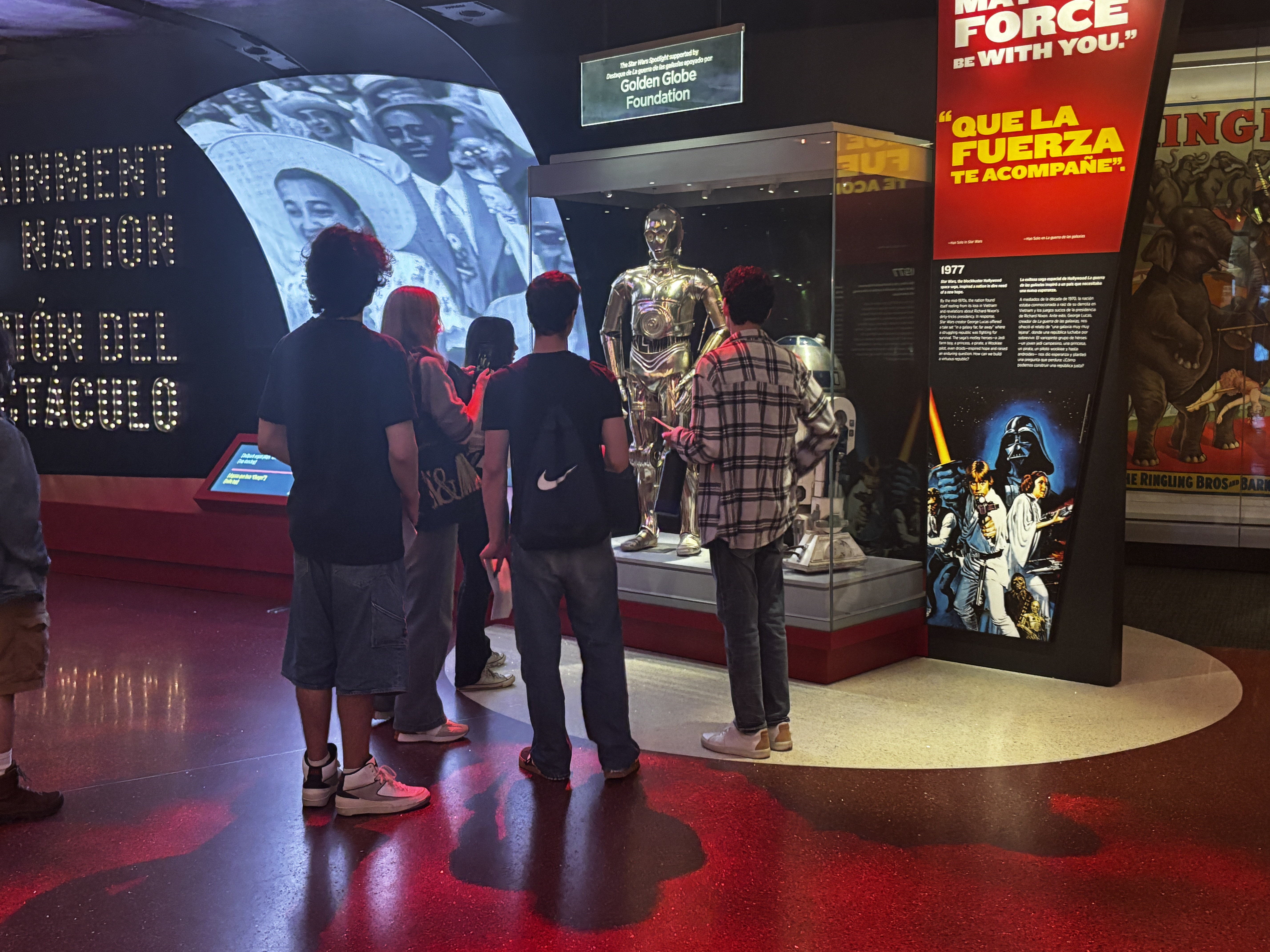
We ended our day at NMAH with the Entertainment Nation exhibit. Students had to find “an influential object,” and sure enough, as soon as they spotted C-3PO and R2-D2, the entire group ran over to check them out.
Engineers and droids – it was the most predictable (and most joyful) moment of the trip.
Looking Ahead
This trip was more than a fun day exploring the museums, it was a stepping stone in a bigger journey. My Smithsonian project is all about showing students how chemistry connects to engineering, society, and the environment through the lens of critical materials. Each museum visit adds another piece to that puzzle.
At NMNH, they saw how cellphones are built on a network of mined elements, each with its own ethical and environmental footprint. At NMAH, they saw how culture and technology shape the way we think about innovation, from Star Wars droids to everyday tools. And by the end of the trip, they were already making plans to visit the National Air and Space Museum, ready to explore the materials that may define our future.
That’s the power of using museums as classrooms: students walk away not just with facts, but with connections – between chemistry and engineering, between people and the planet, and between the past, present, and future.
This trip reminded me why I love taking science out of the classroom. Museums give us the chance to connect chemistry to history, ethics, and even pop culture.
If that’s not a successful chemistry field trip, I don’t know what is.
Related Posts


This Post Has 0 Comments